Apartment Complex Water Damage Restoration — Four Levels, Victoria
Fast-Response Structural Drying Across Four Levels
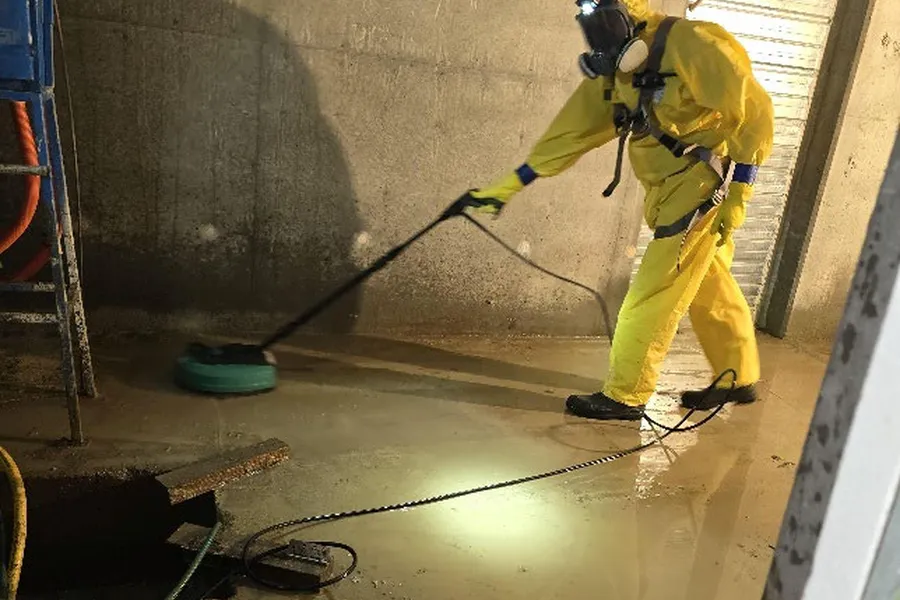
A water loss originating from an apartment on Level 5 affected four levels, more than 10 apartments/areas and common spaces. Mapped on Day 1 and dried to standard within the targeted 3-day period.
4 levels
Assessed and mapped on Day 1
10+
Apartments and areas dried across the site
3 days
Target drying period achieved on time
Every project is delivered under our certified quality, environmental and occupational health & safety management systems.
The brief at a glance
- Site type
- Residential apartment complex
- Service type
- Water Restoration — accelerated structural drying
- Primary origin
- Water loss originating from an apartment in Level 5
- Spread
- 4 levels affected, including 10+ apartments/areas and common areas
- Drying response
- Accelerated structural drying using injector, heat-assisted, and zone-specific standard drying systems
- Target timeframe
- 3 days — achieved on time
- 4 levels affected
- More than 10 apartments/areas impacted
- Common areas across the residential site were also affected
- Visible damage included swollen skirtings and paint bubbling
- Complete moisture assessment and mapping on Day 1
- Document damage and protect structural elements
- Arrange temporary accommodation
- Secure approvals for removal of moisture-affected skirtings
- Move quickly into multi-zone structural drying
Project summary
This case study outlines the response to a significant residential water loss event that affected four levels of the building, including more than 10 apartments/areas and the associated common spaces.
Day 1 focused on moisture assessment, identification and mapping across the affected areas. Resultant damages were identified, recorded, and reviewed so the structure could be protected and the dry-out plan could be built around actual site conditions.
To minimise secondary damage and reduce disruption to occupants, a fast-response scope of works was prepared immediately. This included arranging temporary accommodation for residents of uninhabitable areas, securing approvals to remove moisture-elevated and swollen skirtings, and coordinating an accelerated drying approach for all impacted zones.
What went wrong
A water loss originating from an apartment on Level 5 travelled through four levels of an occupied residential complex, affecting more than 10 apartments/areas as well as shared common spaces. Visible damage included swollen skirtings and paint bubbling, with moisture having moved into enclosed structural cavities in the most heavily affected apartment.
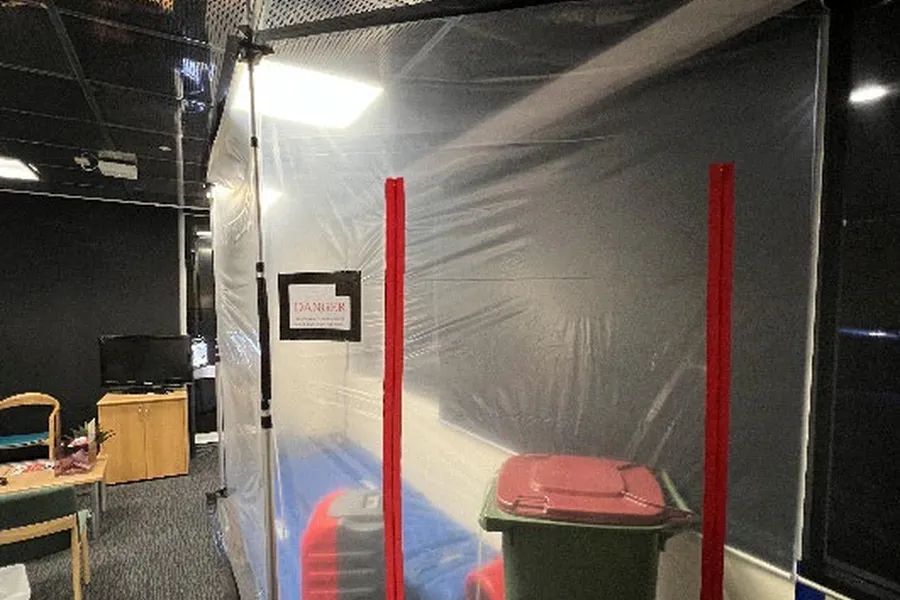
The building remained occupied and in use throughout the response, so live residential access areas had to be returned to service as quickly as possible while affected residents were relocated to temporary accommodation.
Key challenges identified
- Water spread across four levels including common areas
- More than 10 apartments/areas requiring individual drying strategies
- Moisture penetration into enclosed wall, floor and cavity spaces
- Occupied building — temporary accommodation required for uninhabitable areas
- Live residential access areas needing rapid return to use
- Approvals required for removal of moisture-elevated swollen skirtings
- A tight 3-day target for drying the site to standard
How we restored it
On Day 2, moisture-elevated swollen skirtings were removed in the approved areas and drying equipment was installed in line with the scope. This allowed the team to move quickly from investigation into active structural drying.
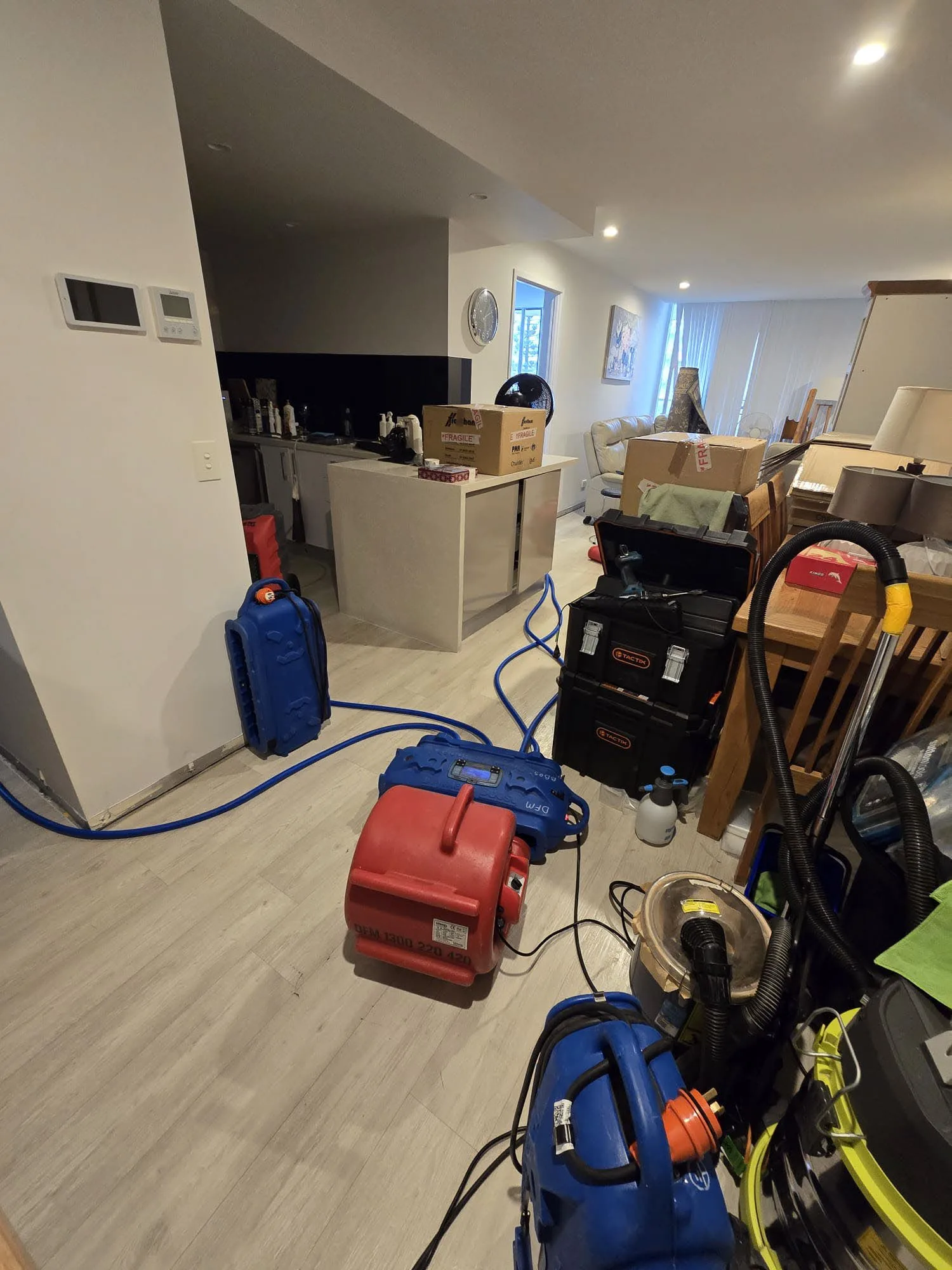
Injector drying was used in the source apartment because the entire apartment was affected and moisture had moved into enclosed structural cavities. Injection drying is designed to direct airflow into wall, floor, or cavity spaces that cannot be dried effectively with surface airflow alone, making it suitable for deep structural drying in heavily affected areas.
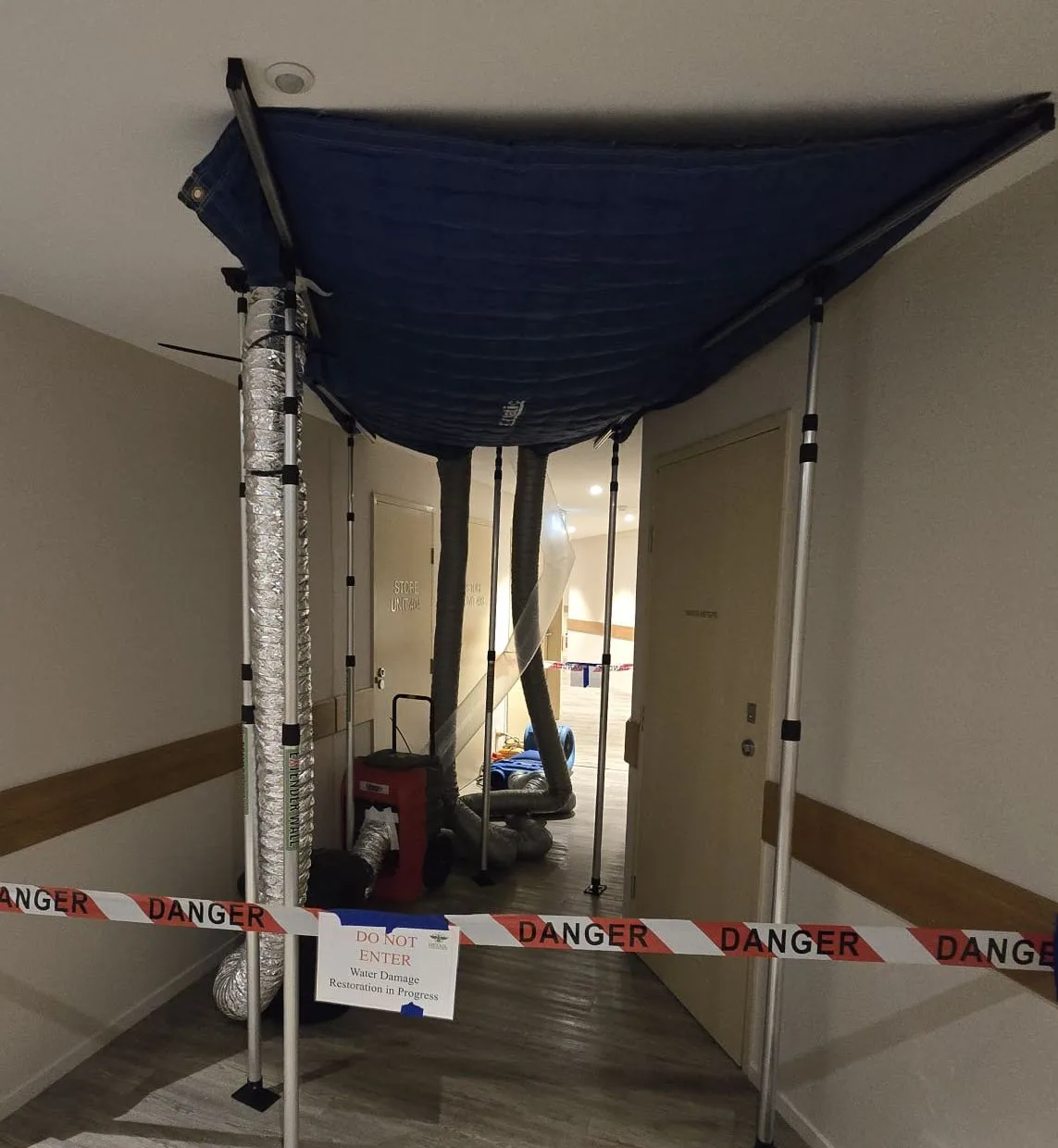
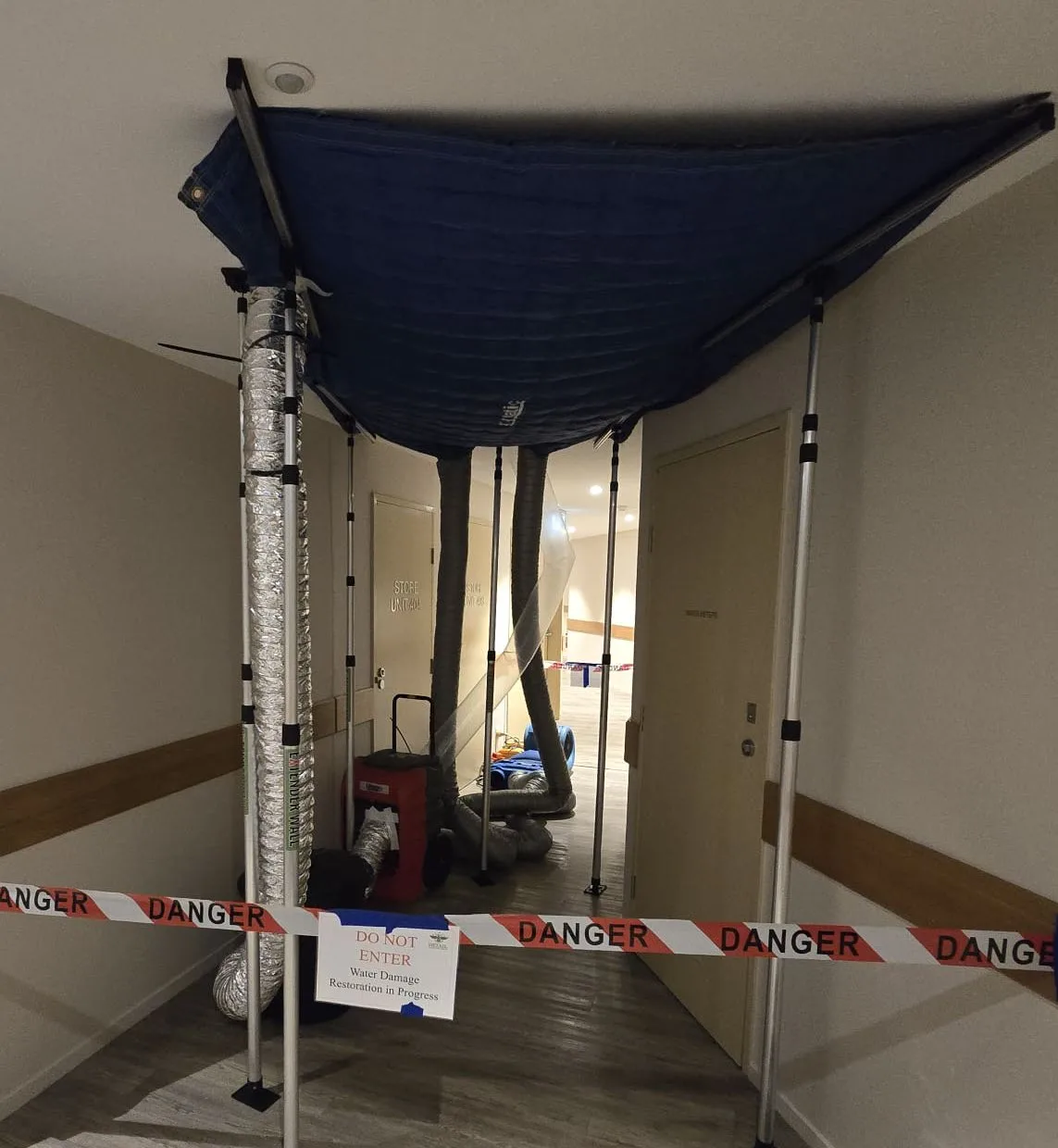
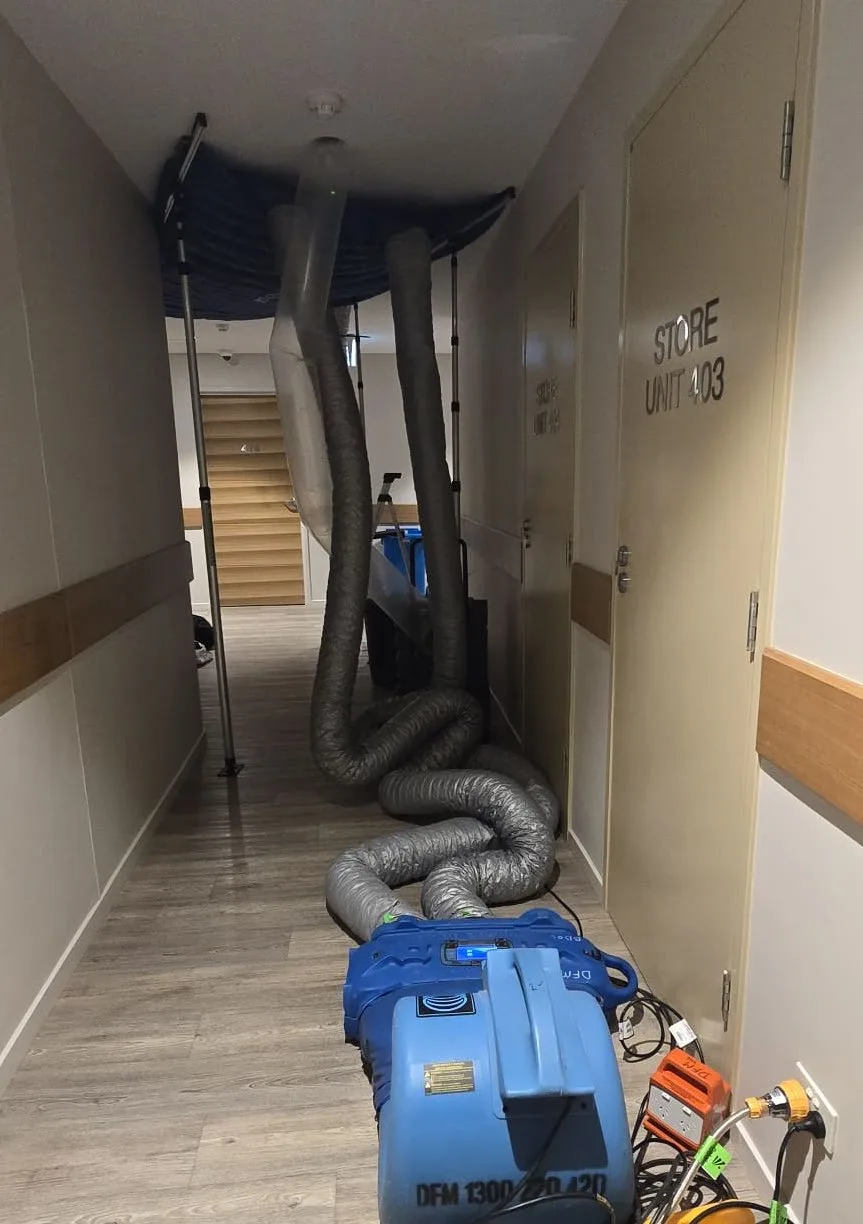
Heat drying was applied to the Level 4 common area because it was a live residential access area and needed to be returned to use as quickly as possible. Controlled heat drying helps accelerate evaporation and can reduce drying time in targeted structural areas, which made it the most practical method for this section of the loss, while the remaining affected apartments and common areas were dried using standard drying setups selected to suit each zone.
Scope of works
- Day 1 moisture assessment, identification and mapping across all affected areas
- Resultant damages identified, documented and reviewed before scoping
- Temporary accommodation arranged for residents of uninhabitable areas
- Approved removal of moisture-elevated and swollen skirtings
- Injector drying in the source apartment for deep structural cavity drying
- Heat drying applied to the Level 4 common area to restore access quickly
- Zone-specific standard drying setups across the remaining apartments and common areas
- Daily moisture monitoring, psychrometric tracking and equipment repositioning
Response timeline
The following timeline summarises how the project was assessed, stabilised, and dried to standard within the targeted timeframe.
| Stage | Timing | Case study summary |
|---|---|---|
| 1 | Day 1 | Moisture assessment and mapping were completed across the affected areas. Resultant damages were identified, documented, and reviewed so the structure could be protected and the dry-out scope could be set quickly. |
| 2 | Day 2 | Approved moisture-elevated swollen skirtings were removed and drying equipment was installed. Injector drying was used to direct airflow into wall, floor, and cavity spaces that cannot be dried effectively with surface airflow alone, heat drying was applied to the Level 4 ceiling area, and standard drying setups were installed in the remaining affected areas. |
| 3 | Day 3 | Moisture monitored and equipment repositioned according to moisture readings and psychrometrics. |
| 4 | Day 4 | Final verification completed. Affected areas confirmed dried to standard, meeting the three-day drying target set at the outset. |
Managing the response
Our focus throughout the project was not only on drying the building, but on managing the entire response in a controlled and transparent way. We maintained regular communication with residents, building management and the client, provided ongoing updates as site conditions changed, and sought approvals for items outside the initial emergency scope.
By combining detailed documentation, clear communication, area-specific drying strategies and timely decision-making, the project was able to progress efficiently while minimising secondary damage and disruption.
With clear documentation, communication, prompt approvals, and coordinated drying across multiple affected areas, the site was brought back to dry standard within the targeted 3-day period.
Frequently asked questions
Key outcomes
- Four-level water loss assessed, documented and stabilised on Day 1
- More than 10 apartments/areas and common spaces dried to standard
- Injector drying applied where moisture had entered enclosed structural cavities
- Heat drying returned the Level 4 common access area to use quickly
- Targeted 3-day drying period achieved on time
Outcome summary
A four-level residential water loss affecting more than 10 apartments/areas and common spaces was assessed, documented, stabilised, and dried within approximately 3 days. The project combined rapid moisture mapping, approved strip-out, and targeted drying methods to help control the spread of damage and return the affected areas to dry standard as quickly as practical.
This multi-level residential water loss was managed as a fast-response structural drying project. From initial mapping and damage documentation through approved strip-out and targeted drying, the affected apartments and common areas were stabilised quickly and dried within approximately 3 days. Specialised drying methods were applied where required, including injector drying and heat-assisted drying, helping minimise secondary damage and reduce disruption across the site.
Detail Facility Management delivers this capability through our water damage restoration teams and our 24/7 emergency response service across Victoria.
Backed by the industry bodies that set the bar.



Confidential discussion
Speak directly with our General Manager
Talk through scope, methodology, compliance evidence or a live loss — direct, no call centre.