Confined Space Remediation — Sewer-Contaminated Lift Shaft Pit
Sewer Contamination Remediation, Structural Cleaning & Drying
Sewer-contaminated lift shaft pit remediated under AS/NZS 2865:2009 confined space protocols — 20 days, zero harm, all 10 moisture points dried to the Tramex 4.0 benchmark.
Zero
Harm across 20 days of confined space works
10/10
Moisture points dried to ≤ 4.0 Tramex
81.8% → 45%
Relative humidity reduction
Every project is delivered under our certified quality, environmental and occupational health & safety management systems.
The brief at a glance
- Client / facility
- Commercial Building – Lift Shaft Pit (Confined Space)
- Service type
- Confined Space Remediation, Contamination Cleaning & Structural Drying
- Date of works
- 20 Days
- Space classification
- Confined Space – Lift Shaft Pit (AS/NZS 2865:2009 compliant)
- Contamination type
- Sewer contamination from dislodged/leaking sewer pump – biological hazard
- Affected structures
- Concrete slab (floor), concrete wall linings, metal ceiling linings, mechanical components
- Safety classification
- High-risk confined space entry – atmospheric hazards, biological hazards, restricted access
- Safety outcome
- ZERO HARM – No incidents, injuries, or safety events throughout project
- Lift shaft pit (confined space)
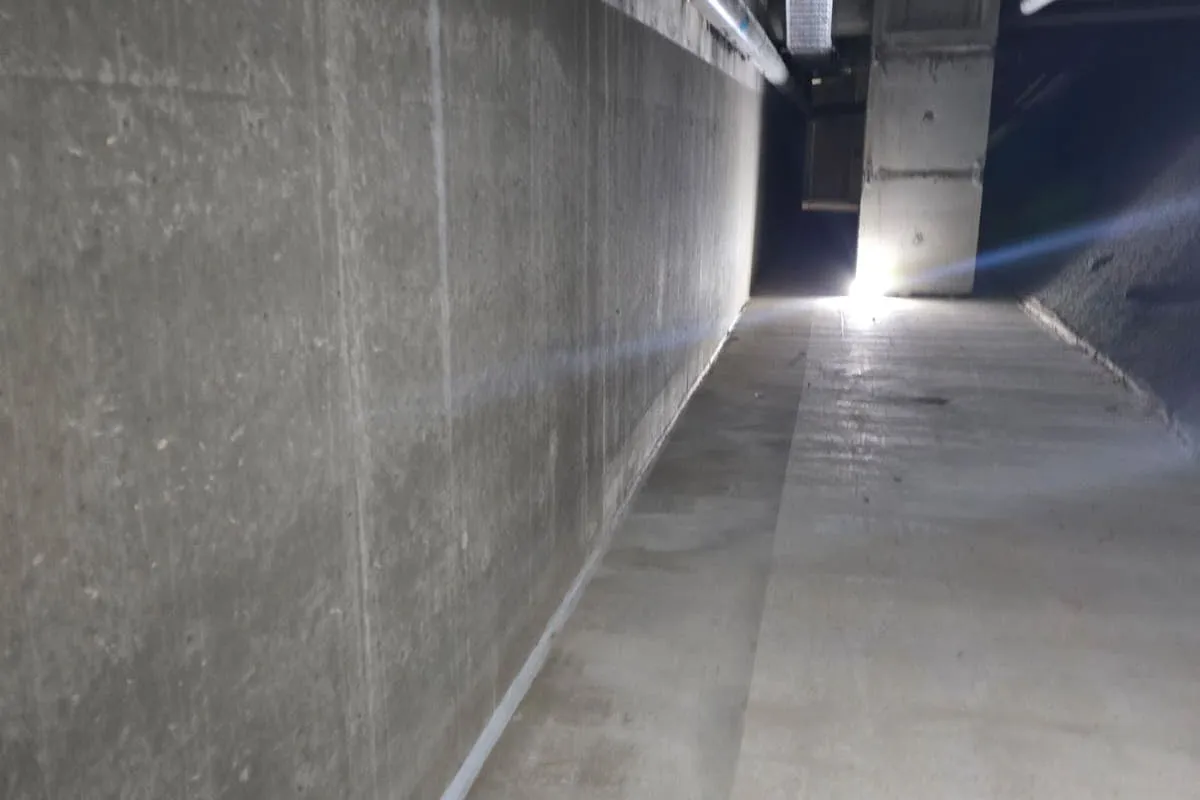
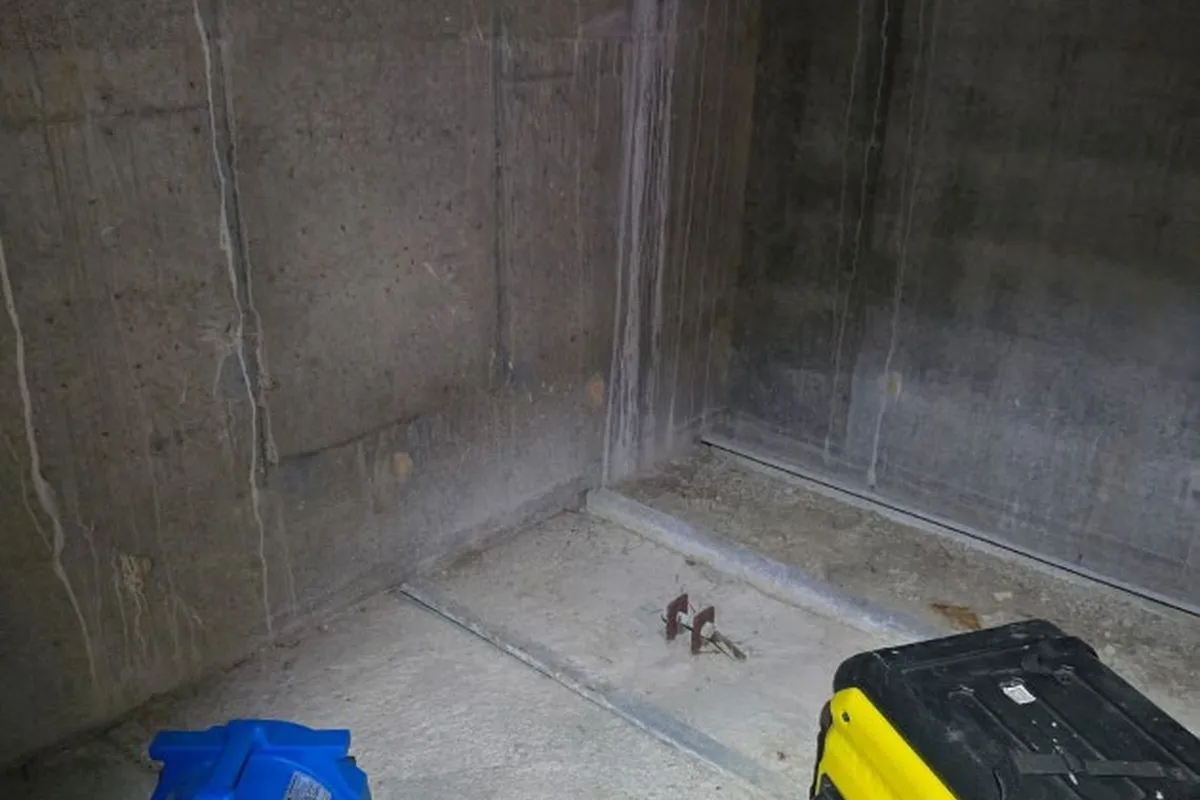
- Concrete slab floor (10 moisture monitoring points)
- Concrete wall linings (3 moisture monitoring points)
- Metal ceiling linings
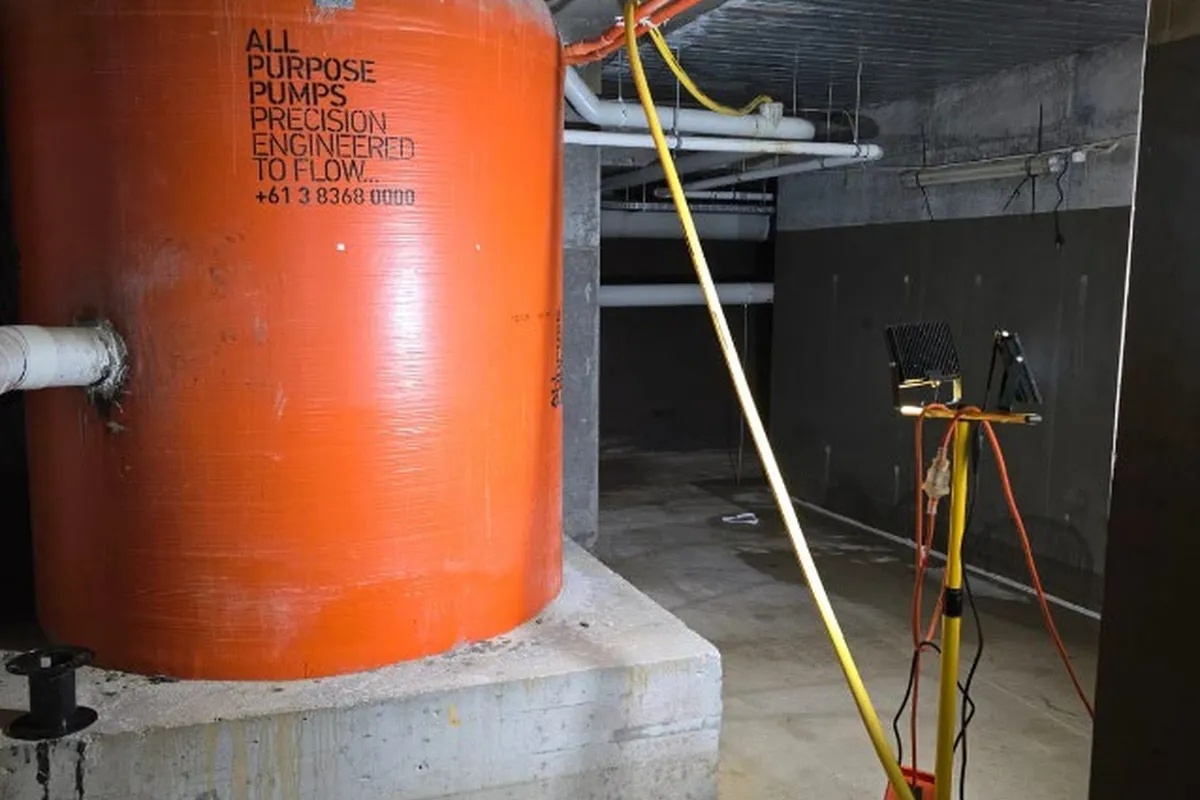
- Sewer contamination from leaking pump
- Rust on mechanical lift components
- Establish confined space safety systems before entry
- Atmospheric monitoring and mechanical ventilation
- Remediate sewer contamination from all surfaces
- Pressure wash, clean, and sanitise all structures
- Dry concrete
- Achieve zero harm throughout confined space operations
Project summary
This case study outlines the remediation of a sewer-contaminated lift shaft pit — a classified confined space requiring strict compliance with AS/NZS 2865:2009 Safe Working in a Confined Space. The project involved biological hazard remediation, structural pressure washing, Condition 2 cleaning, antimicrobial treatment, and structural drying of concrete surfaces within a high-risk confined space environment.
The lift shaft pit had been contaminated by an ongoing sewer leak from a pump near the temporary scaffolding. Sewer water had saturated the concrete slab floor and wall linings, creating biological contamination requiring specialist remediation under confined space protocols.
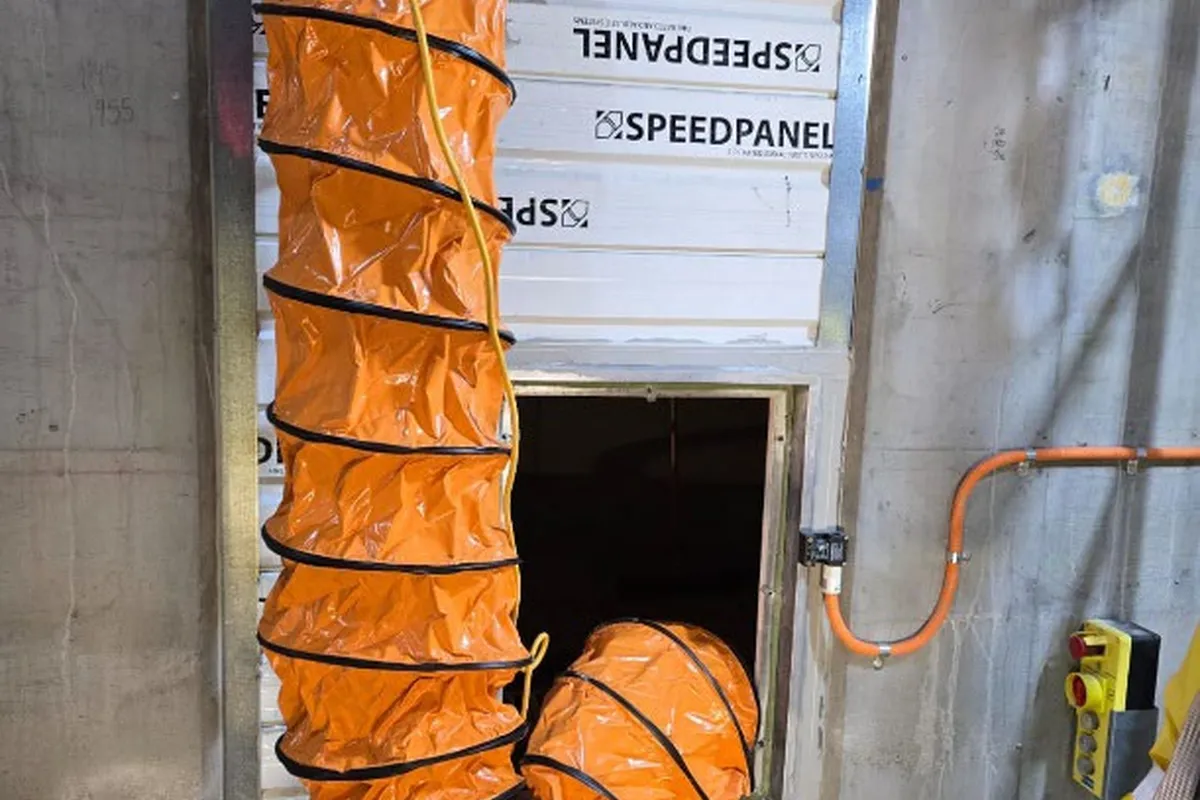
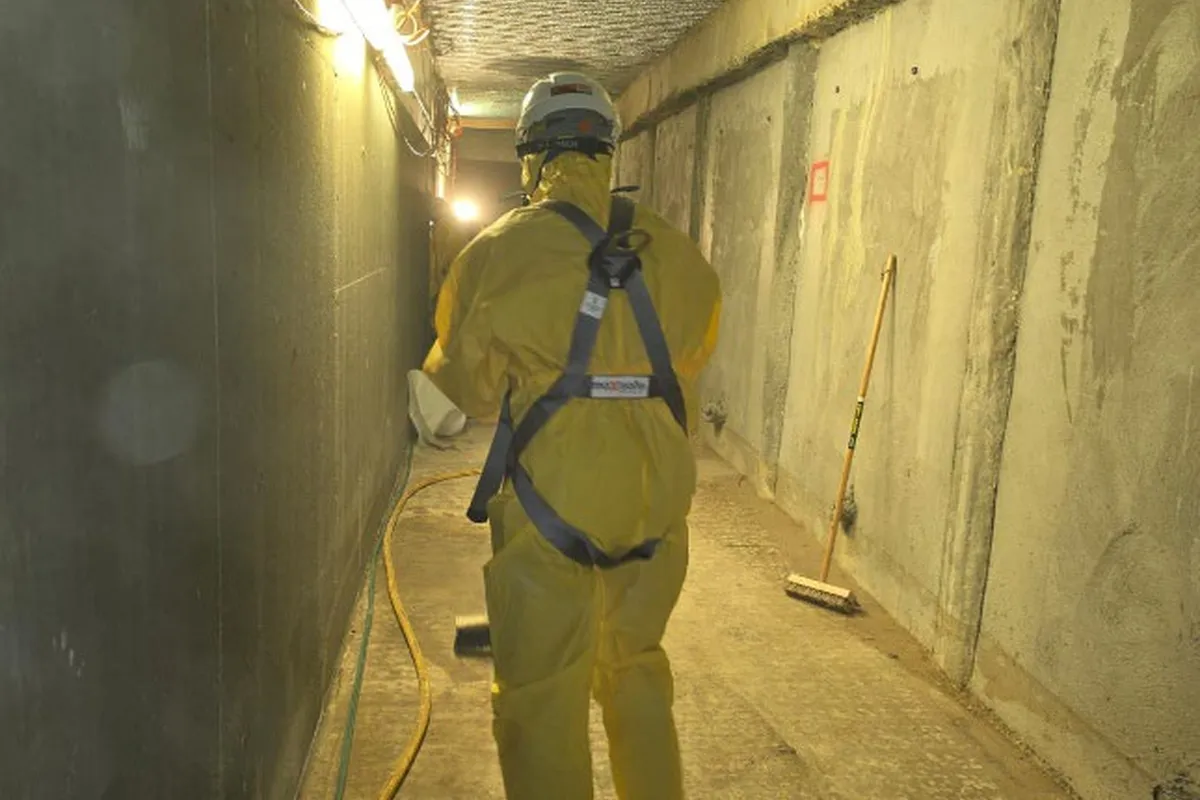
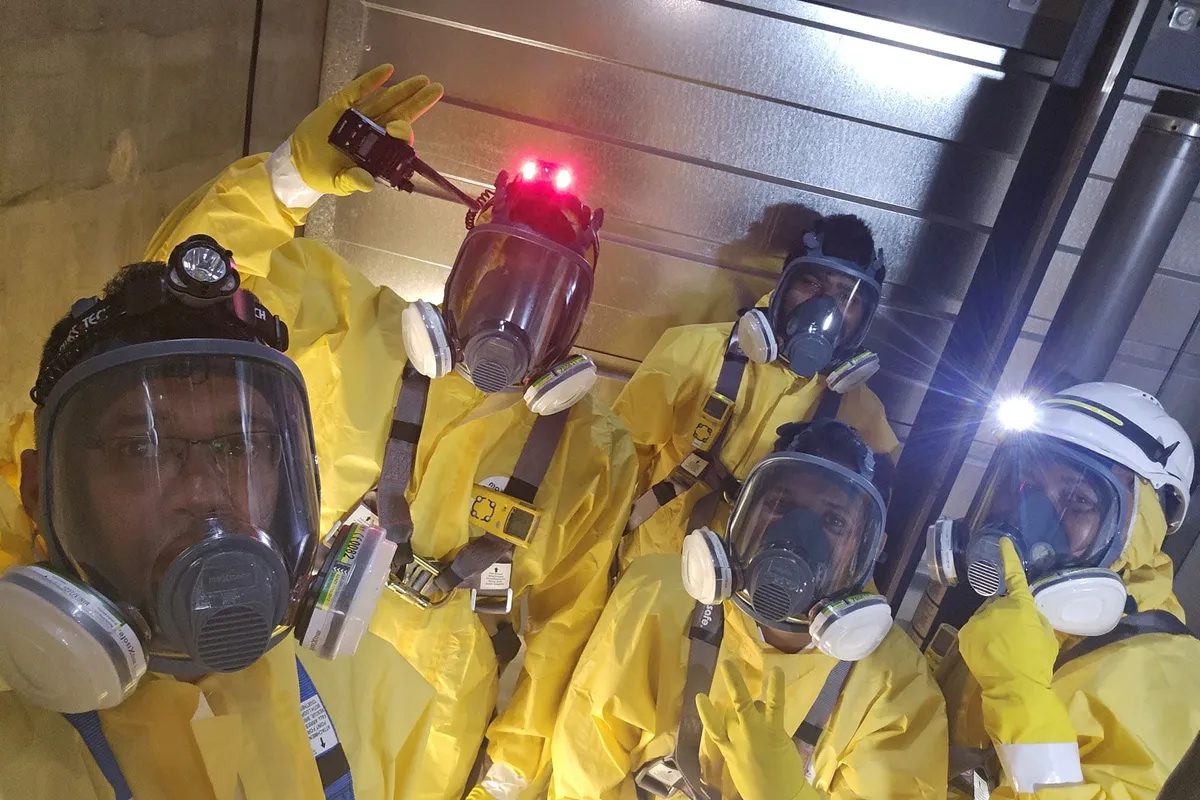
Detail Facility Management deployed a specialist confined space team with full atmospheric monitoring capabilities, mechanical ventilation with HEPA-assisted air filtration, multi-gas detection systems, and continuous radio communication. All works were conducted under confined space entry permits with Safe Work Method Statements (SWMS), toolbox talks, and hourly atmospheric gas monitoring.
The project was completed over 20 days with zero safety incidents, zero harm to personnel, and all concrete surfaces dried to the Tramex benchmark of 4.0 or below. An active sewer leak was identified during works and reported to the client with photographic and video evidence, along with recommendations for leak detection and lift component inspection.
What went wrong
A lift shaft pit — classified as a confined space under AS/NZS 2865:2009 — required full remediation following sewer contamination from a leaking pump. The confined space presented biological hazards (sewer contamination), atmospheric hazards (potential for H₂S, O₂ depletion, combustible gases), restricted access (lift technician coordination required), and structural moisture saturation requiring extended drying in a power-limited environment.
Key challenges identified
- Classified confined space requiring full AS/NZS 2865 compliance for every entry
- Biological hazard from sewer contamination — requiring decontamination-grade cleaning and sanitisation
- Atmospheric hazards including potential hydrogen sulphide (H₂S) from sewer, oxygen depletion in enclosed pit, and combustible gas risk
- Restricted access — lift technician required for safe entry
- Power limitations within the confined space — only 3 air movers and 1 LGR dehumidifier could operate simultaneously
- Active sewer leak identified during works from pump near temporary scaffolding — ongoing contamination source
- Rust discovered on mechanical lift components — requiring specialist lift technician assessment
- Extended concrete drying time (14 days) due to saturated slab and wall linings in enclosed environment
How we restored it
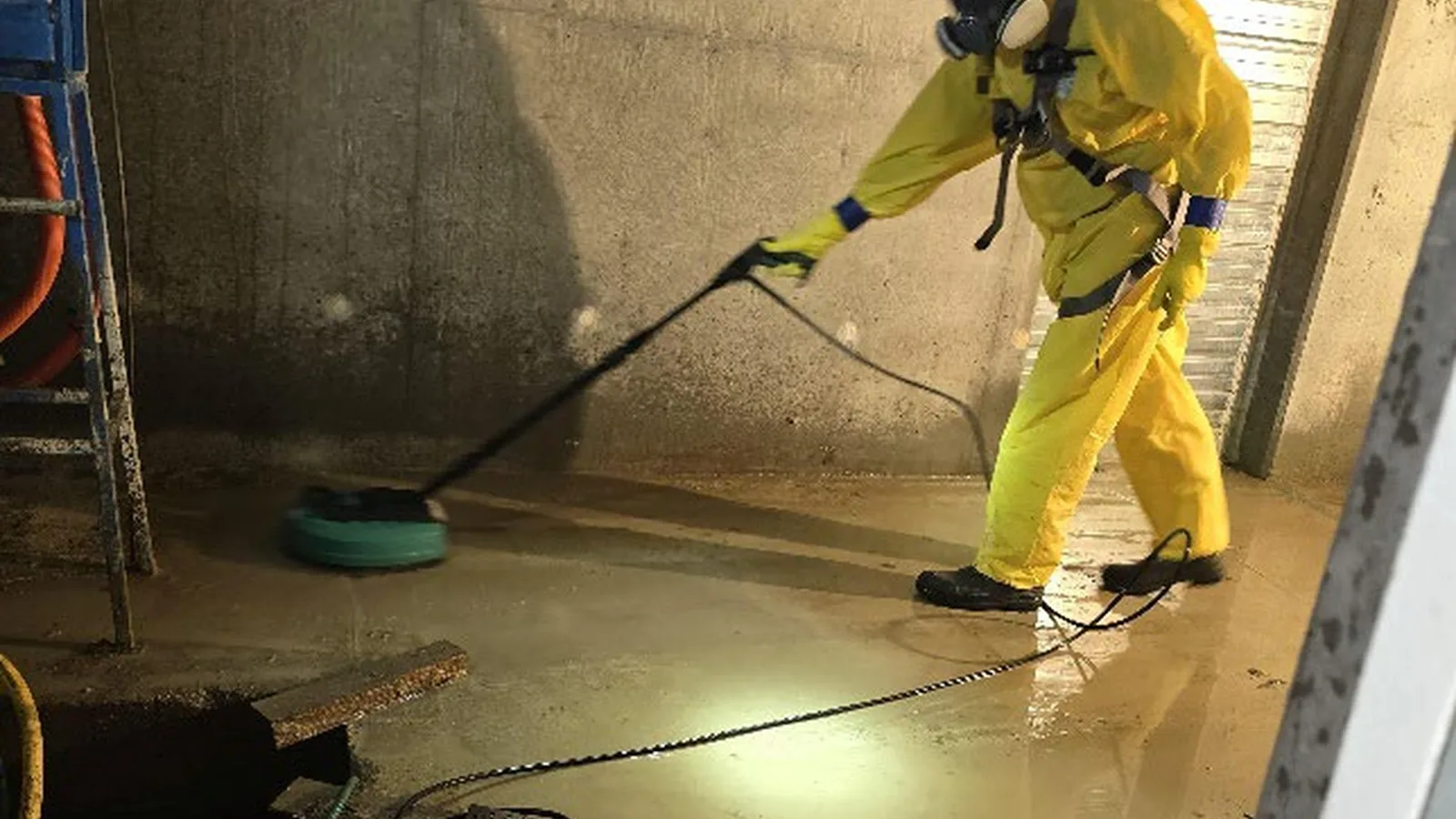
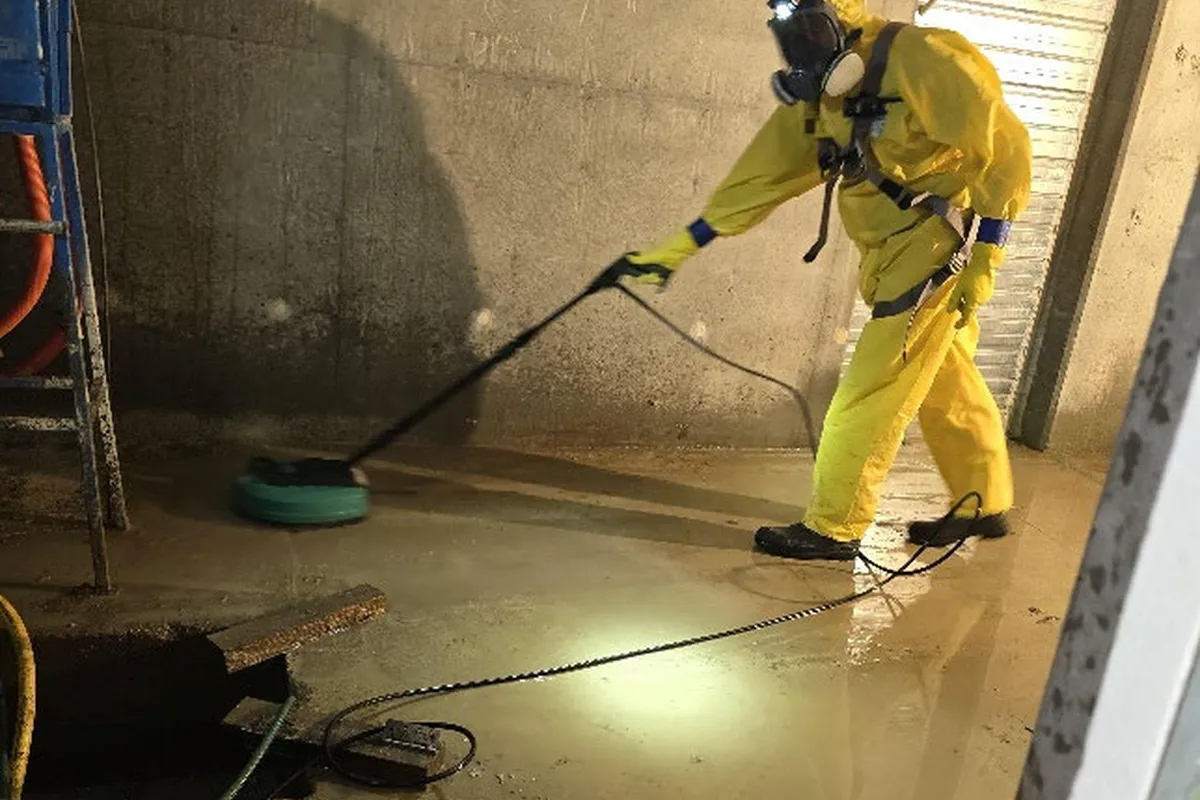
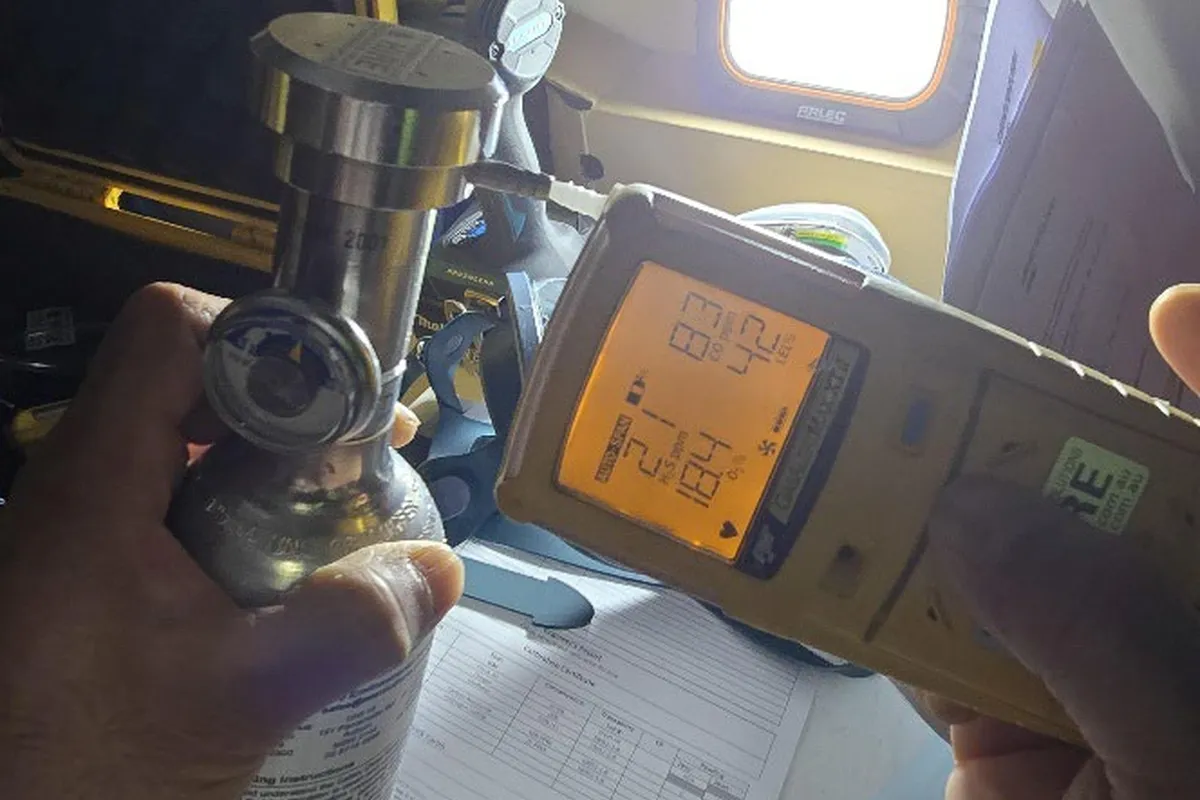
Safety systems were established before entry: permits, SWMS, toolbox talks, team inductions and pre-entry atmospheric testing. Mechanical ventilation with HEPA-assisted negative air filtration ran throughout, with continuous four-gas monitoring for oxygen, carbon monoxide, hydrogen sulphide and lower explosive limit.
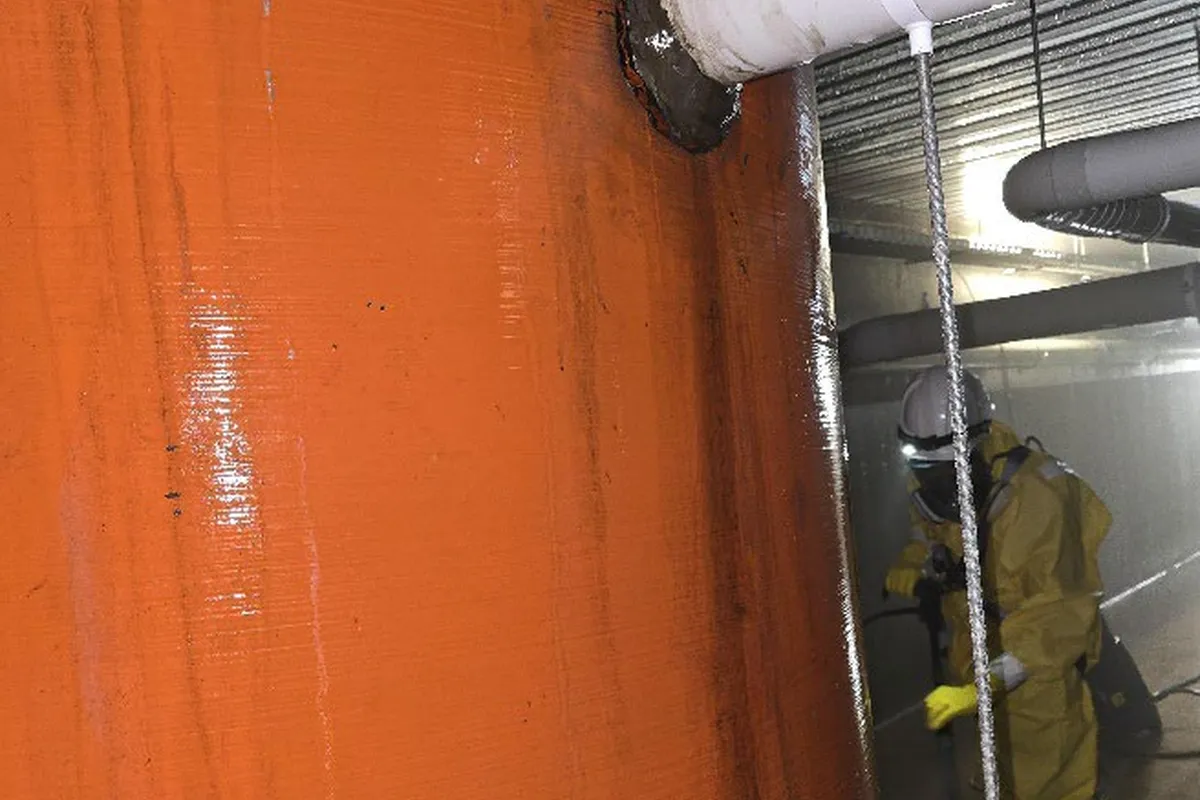
Once controls were verified, the team pressure washed and remediated all contaminated surfaces, applied antimicrobial treatment, conducted swab testing, and installed structural drying tracked against a 10-point moisture grid using a Tramex concrete moisture encounter meter.
Scope of works
- Confined space safety setup: permits, SWMS, toolbox talks, team inductions, atmospheric testing
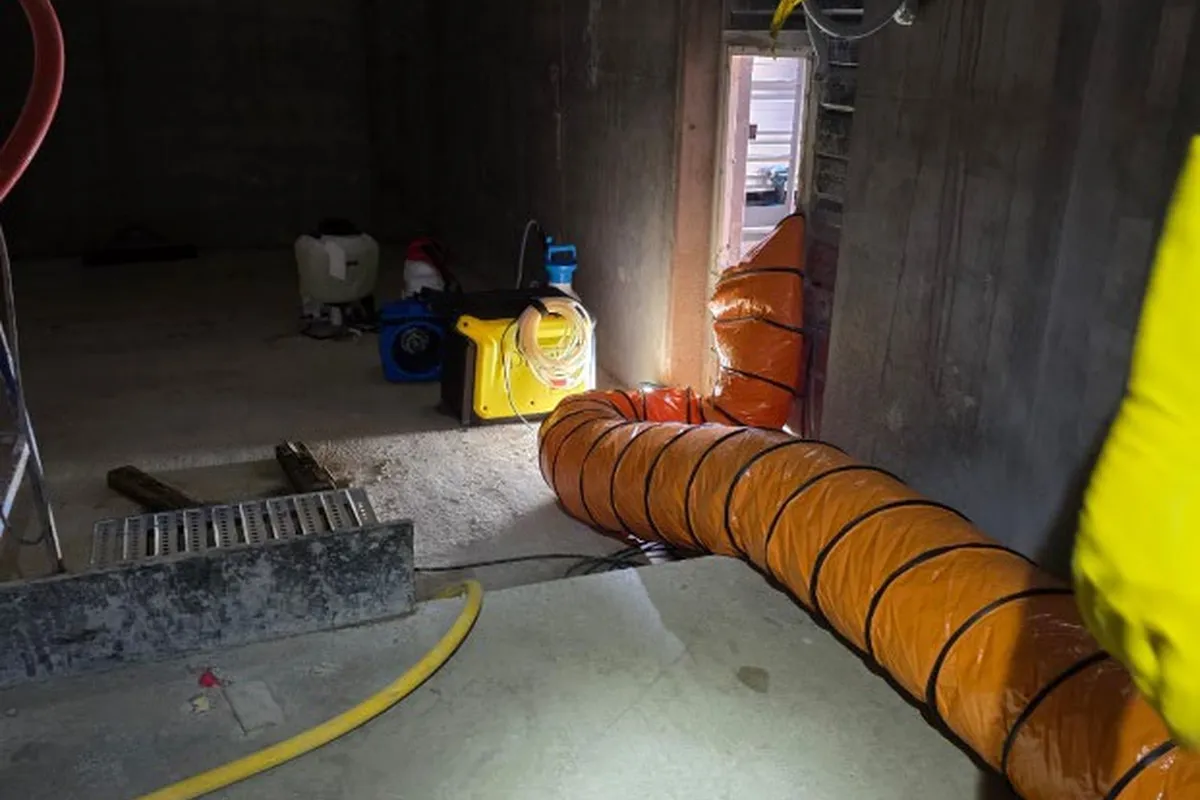
- Mechanical ventilation with HEPA-assisted negative air filtration system
- Continuous atmospheric gas monitoring (O₂, CO, H₂S, LEL) with hourly logging
- Bump testing of all gas detectors at start of every shift
- Bulk cleaning of sewer-contaminated confined space
- Pressure washing of concrete slab, concrete walls, and metal ceiling linings
- Condition 2 cleaning and antimicrobial sanitisation of all surfaces
- Swab testing for contamination verification
- Structural drying with air movers and LGR dehumidifier (power-limited environment)
- 10-point moisture monitoring grid with Tramex concrete meter
- Identification and reporting of active sewer leak (photographs and video evidence)
- Recommendation for leak detection and lift component inspection
Confined space safety & compliance
Working in a confined space is one of the highest-risk activities in the restoration industry. Detail Facility Management applies a rigorous safety framework that exceeds minimum regulatory requirements, ensuring the safety of every team member from entry to exit.
All confined space operations on this project were conducted in full compliance with:
- AS/NZS 2865:2009 – Safe Working in a Confined Space
- Workplace Health and Safety Act 2011 (Cth) and applicable state WHS regulations
- Australian Standard AS 1715 – Selection, Use and Maintenance of Respiratory Protective Equipment
- AS/NZS 1716 – Respiratory Protective Devices
- Client-specific confined space entry procedures and induction requirements
Atmospheric monitoring & gas detection
Continuous atmospheric monitoring is the cornerstone of confined space safety. The following gas detection and monitoring protocols were applied throughout this project.
| Parameter | Monitoring protocol | Standard / action level |
|---|---|---|
| Oxygen (O₂) | Continuous monitoring via 4-gas detector. Pre-entry and hourly readings throughout shift. | Safe range: 19.5%–23.5%. Entry prohibited outside range. |
| Carbon Monoxide (CO) | Continuous monitoring. Alarm set at TWA threshold. | TWA: 30 ppm. STEL: 200 ppm. Evacuate at alarm. |
| Hydrogen Sulphide (H₂S) | Critical for sewer environments. Continuous monitoring with low-level alarm. Pre-entry mandatory. | TWA: 10 ppm. STEL: 15 ppm. Immediate evacuation above STEL. |
| Lower Explosive Limit (LEL) | Combustible gas detection. Continuous monitoring throughout. Pre-entry mandatory. | < 5% LEL for entry. Evacuate at 10% LEL. No hot works above 5%. |
| Bump Testing | All gas detectors bump tested at start of every shift before entry. Documented in daily logs. | AS 60079-29-2 compliance. Failed bump = detector replaced before entry. |
Engineering controls & ventilation
| Control measure | Implementation |
|---|---|
| Mechanical Ventilation | Forced-air mechanical ventilation system installed before entry and maintained continuously. Fresh air supply directed into confined space to dilute and displace hazardous atmospheres. |
| HEPA Air Filtration | HEPA-assisted air filtration device connected to ventilation system. All exhaust air filtered through HEPA before release to the car park environment to prevent cross-contamination of building air. |
| Negative Air Pressure | Negative air pressure maintained within the confined space to ensure all airborne contaminants (sewer gases, particulates) flow through the HEPA filtration system rather than escaping into adjacent areas. |
Confined space entry controls
| Safety protocol | Implementation on this project |
|---|---|
| Entry Permits | Confined space entry permits issued daily before any work commenced. Permits documented atmospheric test results, hazard controls, emergency procedures, and authorised personnel. |
| Risk Assessment | Comprehensive risk assessment conducted at start of each shift. All potential hazards identified and addressed before entry. Updated as new hazards emerged (e.g. sewer leak discovery). |
| SWMS | Safe Work Method Statements prepared for all confined space activities including entry/exit, pressure washing, chemical use, drying equipment installation, and emergency evacuation. |
| Toolbox Talks | Pre-shift toolbox talks conducted daily covering day's scope, hazard updates, atmospheric conditions, emergency procedures, and team roles. |
| Team Inductions | All personnel completed site-specific confined space induction before entry. Inductions documented. |
| Standby Person | Qualified standby person maintained at entry point at all times during confined space occupation. Continuous visual or radio contact with entrants. |
| Communication | Two-way radio contact maintained between entrants and standby person throughout all confined space operations. Communication checked before entry. |
| Hourly Gas Monitoring | Atmospheric gas levels recorded hourly throughout each shift — not just at entry. Any deviation triggers immediate evacuation and reassessment protocol. |
| Emergency Rescue Plan | Documented emergency rescue procedures in place. Rescue equipment available at entry point. All team members trained in confined space rescue procedures. |
| Lift Tech Coordination | Lift technician required for safe access to lift shaft. Entry only permitted when qualified lift tech present. Works paused when tech unavailable (13/11 and 19/11). |
ZERO HARM ACHIEVED — 20 days of confined space operations | Zero incidents | Zero injuries | Zero safety events. Full AS/NZS 2865:2009 compliance maintained throughout.
Our Six Sigma approach (DMAIC)
The DMAIC methodology was critical for this project, providing structure across safety planning, contamination remediation, drying optimisation, and zero-harm achievement in a high-risk environment.
| Phase | Activity | Key metrics / outcomes |
|---|---|---|
| DEFINE | Classified confined space under AS/NZS 2865. Identified sewer contamination, atmospheric hazards, and structural moisture. Established safety framework, permits, SWMS, and team inductions. | Confined space classified; safety framework established Day 1; team inducted |
| MEASURE | Pre-entry atmospheric gas testing (O₂, CO, H₂S, LEL). Bump tests on all detectors. Psychrometric conditions recorded. 10-point moisture grid established across concrete slab and walls. | Baseline: all points 4.5–6.9 Tramex (BM 4.0); RH 81.8%; atmospheric clear |
| ANALYSE | Analysed contamination pathways, atmospheric risk profile, power limitations, and drying constraints. Identified active sewer leak during remediation. Assessed rust on lift components. | Sewer leak reported with photo/video; power limited to 3AM + 1DH; 14-day dry plan |
| IMPROVE | Executed phased remediation: bulk cleaning, pressure washing, Condition 2 cleaning, antimicrobial sanitisation. Installed drying equipment. Repositioned based on moisture data. Swab testing conducted. | 70% complete by Day 3; Condition 2 cleaning verified; swabs taken Day 7 |
| CONTROL | Daily atmospheric monitoring. Moisture checks at every attendance. Equipment repositioned based on readings. Final verification: all points ≤ 4.0 Tramex. Equipment removed 27/11. | All 10 points dried to ≤ 4.0 Tramex; zero harm; project complete |
Psychrometric progression
Drying within a confined space presented unique challenges due to power limitations (maximum 3× AM + 1× LGR DH), restricted access requiring lift technician coordination, and the enclosed environment limiting natural evaporation.
| Parameter | 14/11 (Day 1) | 20/11 (Day 7) | 23/11 (Day 10) | 27/11 (Final) |
|---|---|---|---|---|
| Temperature | 21.0°C | 20.3°C | 21.9°C | 25.0°C |
| Relative Humidity | 81.8% | 80.7% | 66.3% | 45.0% |
| GPP / Dew Point | 12.70 GPP | 10.0 GPP | — | 12.6°C DP |
10-point moisture grid — drying progression
All readings in Tramex units. Benchmark (BM): 4.0. Meter: Tramex Concrete Moisture Encounter.
| Point | Material | 14/11 | 20/11 | 23/11 | 27/11 | BM | Meter | Status |
|---|---|---|---|---|---|---|---|---|
| Concrete Slab – Floor | ||||||||
| Point 1 | Conc. Slab | 6.9 | 6.9 | ≤ 4.0 | 3.8 | ≤ 4.0 | Tramex | ✔ Dry |
| Point 2 | Conc. Slab | 6.9 | 6.9 | ≤ 4.0 | 3.7 | ≤ 4.0 | Tramex | ✔ Dry |
| Point 3 | Conc. Slab | 6.9 | 6.9 | ≤ 4.0 | 3.5 | ≤ 4.0 | Tramex | ✔ Dry |
| Point 4 | Conc. Slab | 6.9 | 4.5–5.0 | ≤ 4.0 | 3.6 | ≤ 4.0 | Tramex | ✔ Dry |
| Point 5 | Conc. Slab | 4.5–5.9 | 4.5–5.9 | ≤ 4.0 | 3.5 | ≤ 4.0 | Tramex | ✔ Dry |
| Point 6 | Conc. Slab | 5.0 | 5.0 | ≤ 4.0 | 3.8 | ≤ 4.0 | Tramex | ✔ Dry |
| Point 7 | Conc. Slab | 5.0–6.9 | 5.0–6.9 | 4.0–4.1 | 3.9 | ≤ 4.0 | Tramex | ✔ Dry |
| Concrete Wall Linings | ||||||||
| Point 8 | Conc. Wall | 5.0–6.2 | 5.0–6.2 | 4.0–4.1 | 3.8 | ≤ 4.0 | Tramex | ✔ Dry |
| Point 9 | Conc. Wall | 5.0–6.2 | 4.3–5.3 | ≤ 4.0 | 3.6 | ≤ 4.0 | Tramex | ✔ Dry |
| Point 10 | Conc. Wall | 5.0–6.2 | 4.5–5.2 | ≤ 4.0 | 3.5 | ≤ 4.0 | Tramex | ✔ Dry |
Measurable results
| Performance indicator | Target | DFM result |
|---|---|---|
| Safety | Zero harm | Zero incidents, injuries, or safety events across 20 days |
| Atmospheric Compliance | AS/NZS 2865 full compliance | All atmospheric tests clear; hourly monitoring maintained |
| Contamination Removal | Swab clearance | Swab testing conducted; Condition 2 cleaning verified |
| Drying to Standard | All points ≤ 4.0 Tramex | All 10 points at 3.5–4.0 (final reading 27/11) |
| RH Reduction | Below 60% | Reduced from 81.8% to 45.0% over drying period |
| Hazard Identification | Proactive reporting | Active sewer leak identified and reported with photo/video evidence |
| Documentation | Full compliance trail | Daily permits, SWMS, toolbox talks, gas logs, Encircle reports |
Confined space restoration expertise
| Capability | Standard restorer | Detail Facility Management |
|---|---|---|
| Confined Space Qualification | Basic awareness only | Trained confined space entrants, standby, and rescue team |
| Atmospheric Monitoring | Pre-entry test only | 4-gas continuous monitoring with hourly logging and bump testing |
| Ventilation Systems | Basic fan setup | Mechanical ventilation with HEPA-assisted negative air filtration |
| Safety Documentation | Generic SWMS | Site-specific permits, SWMS, toolbox talks, inductions, gas logs |
| Biological Hazards | Basic cleaning | Sewer contamination remediation with Condition 2 cleaning and swab verification |
| Proactive Reporting | Scope-only focus | Hazard identification beyond scope (sewer leak, rust on components) |
| Quality Framework | Ad-hoc approach | Six Sigma DMAIC with 10-point moisture grid and systematic tracking |
Lessons learned & continuous improvement
What went well:
- Zero harm achieved across 20 days of high-risk confined space operations
- Structured daily safety protocols (permits, bump tests, atmospheric monitoring, toolbox talks) maintained consistently
- HEPA-assisted ventilation prevented any contamination escape to car park environment
- 10-point moisture grid provided systematic tracking of drying progress in a challenging environment
- Proactive identification of active sewer leak added value beyond the original scope
- Team coordination maintained despite access delays (lift tech availability)
Improvements implemented for future confined space projects
- Assess power supply capacity before drying phase to plan equipment deployment
- Establish dedicated power circuit for drying equipment in power-limited confined spaces
- Enhanced pre-work leak detection survey before remediation commences
Frequently asked questions
Key outcomes
- 20 days of high-risk confined space operations completed with ZERO HARM
- Full AS/NZS 2865:2009 compliance maintained at every entry — permits, atmospheric testing, ventilation, standby personnel
- Sewer contamination fully remediated with Condition 2 cleaning and antimicrobial treatment verified by swab testing
- All 10 moisture monitoring points dried from 4.5–6.9 to 3.5–4.0 Tramex (at or below BM 4.0)
- Relative humidity reduced from 81.8% to 45.0% through controlled drying in power-limited environment
- Active sewer leak proactively identified and reported with photographic and video evidence
- Recommendations provided for leak detection and lift component inspection to prevent future loss
Outcome summary
A sewer-contaminated lift shaft pit — classified as a confined space under AS/NZS 2865:2009 — was fully remediated, cleaned, sanitised, and dried to standard over 20 days with zero safety incidents. The project demonstrated Detail Facility Management's specialist capability in high-risk confined space restoration, combining rigorous safety compliance with effective contamination remediation and structural drying.
Atmospheric monitoring using 4-gas detection (O₂, CO, H₂S, LEL) was conducted continuously throughout, with bump testing at the start of every shift and hourly gas logging. Mechanical ventilation with HEPA-assisted negative air filtration ensured all exhaust was filtered before release, protecting the adjacent car park environment.
A 10-point moisture monitoring grid tracked concrete slab and wall lining drying from initial readings of 4.5–6.9 Tramex down to 3.5–4.0 (at or below the 4.0 benchmark). Drying was achieved despite power limitations that restricted equipment to 3 air movers and 1 LGR dehumidifier, and access constraints requiring lift technician coordination.
Beyond the contracted scope, the team proactively identified an active sewer leak from a pump near the temporary scaffolding and documented it with photographs and video for the client. Rust on mechanical lift components was also identified, with recommendations provided for specialist inspection. These proactive observations demonstrate DFM's commitment to protecting our clients' assets beyond the immediate restoration scope.
Detail Facility Management delivers this capability through our water damage restoration and mould remediation teams across Victoria.
Backed by the industry bodies that set the bar.



Confidential discussion
Speak directly with our General Manager
Talk through scope, methodology, compliance evidence or a live loss — direct, no call centre.