Mould Remediation
How Much Does Mould Removal Cost in Melbourne? (2026 Price Guide)
What mould removal costs in Melbourne in 2026, from small patches to whole homes, what changes the price, and how to compare quotes. Prices from AU guides.
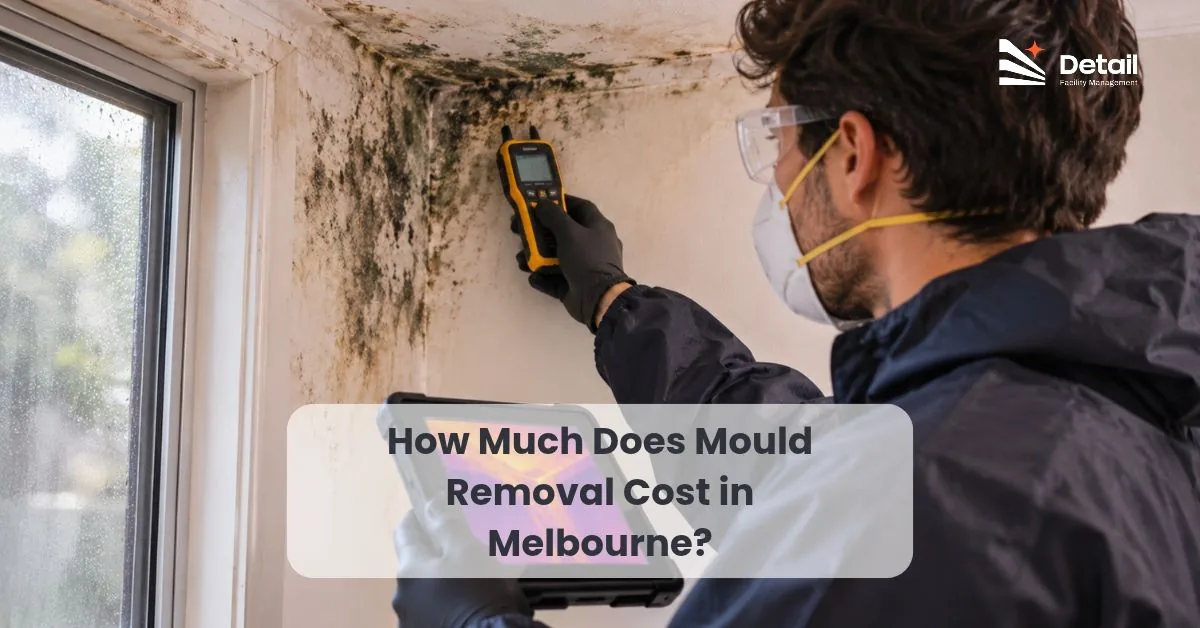
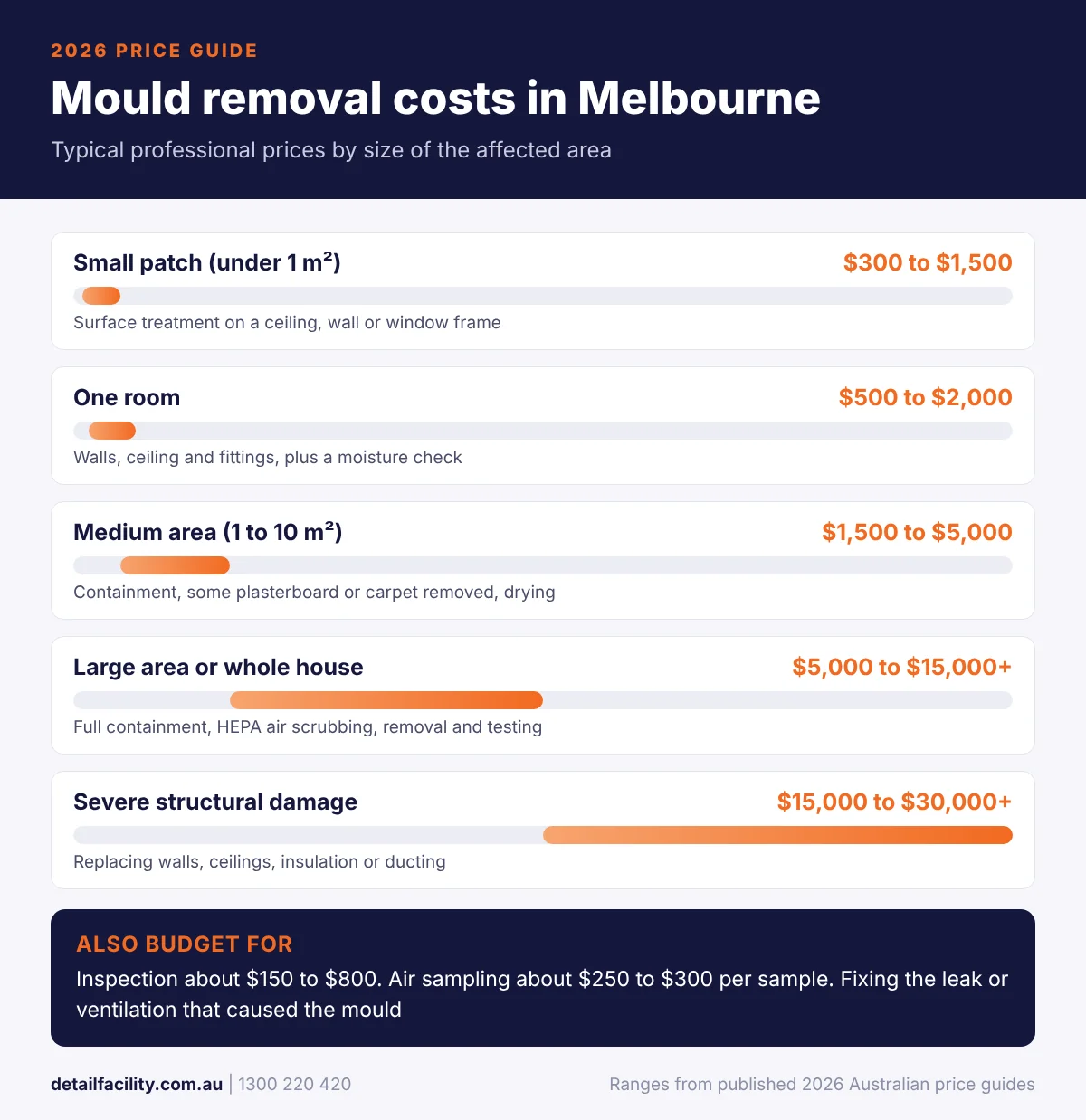
Professional mould removal in Melbourne usually costs between $300 and $6,000. Most single-room jobs fall between $500 and $2,000.
The price depends on how much mould there is, what it is growing on and what is causing it. This guide breaks down 2026 prices from Australian price guides, explains what pushes the cost up, and shows you how to compare quotes.
Quick answer: mould removal prices in 2026
| Job size | Typical cost | What it usually involves |
|---|---|---|
| Small patch (under 1 square metre) | $300 to $1,500 | Surface treatment on a ceiling, wall or window frame |
| One room (bathroom or bedroom) | $500 to $2,000 | Treating walls, ceiling and fittings, plus a moisture check |
| Medium area (1 to 10 square metres) | $1,500 to $5,000 | Containment, removing some plasterboard or carpet, drying |
| Large area or whole house (10+ square metres) | $5,000 to $15,000+ | Full containment, HEPA air scrubbing, material removal, drying and testing |
| Severe structural damage | $15,000 to $30,000+ | Replacing walls, ceilings, insulation or ducting across the home |
These are typical market ranges taken from published 2026 Australian price guides, listed in the sources at the end. Your quote can be higher or lower.
Other mould costs to budget for
| Service | Typical cost | Notes |
|---|---|---|
| Mould inspection | About $150 to $800 | A visual check, moisture readings and a short report |
| Air sampling | About $250 to $300 per sample | Lab testing of indoor air, often with an outdoor sample to compare |
| Detailed inspection report | Can reach $3,000 | Used for insurance claims, legal disputes or large buildings |
| Per-room treatment | From about $400 per room | Advertised by some national companies for moderate mould |
| DIY products | Under $30 | White vinegar, cloths, P2 mask and gloves for small patches |
Testing isn't always needed. If you can see the mould and know the cause, the money is usually better spent on fixing the moisture.
What changes the price
How big the area is
Price grows with the size of the area. A single shower ceiling is a short job, while mould across several rooms needs more people, more equipment and more days.
What the mould is growing on
Hard surfaces like tiles, glass and metal can be cleaned in place. Porous materials like plasterboard, timber, insulation and carpet often have to be cut out and replaced, which adds labour, disposal and rebuilding costs.
Where the mould is
Mould in a roof space, subfloor, wall cavity or air conditioning duct is harder to reach. Access equipment and extra time push the price up.
What is causing it
A professional quote should include finding the moisture source. If the cause is a leak, rising damp or a broken exhaust fan, you may also need a plumber, roofer or electrician.
How much protection the job needs
Larger jobs need the area sealed off with plastic sheeting, HEPA air scrubbers (machines that filter spores out of the air) and protective gear. This stops spores spreading into clean rooms and is a big part of the cost on serious jobs.
Testing and clearance
Some jobs finish with an air test to confirm the area is clean. This is common in hospitals, schools, rentals with disputes and insurance claims.
DIY or professional: what you get for the money
| DIY | Professional | |
|---|---|---|
| Cost | Under $30 | $300 to $6,000+ for most homes |
| Best for | Small surface patches under about 1 square metre | Large areas, hidden mould, mould that keeps coming back |
| Finds the cause | Only if it is obvious | Moisture readings and thermal imaging |
| Removes damaged materials | No | Yes, where needed |
| Written report | No | Yes, useful for landlords, agents and insurers |
| Risk | Spreading spores if done wrong | Low, with containment and HEPA equipment |
The Better Health Channel says small to medium areas can be cleaned at home. It recommends calling a mould remediation professional when large areas of mould keep growing back.
What a professional mould inspection includes
A good inspection looks for the cause, not only the mould you can see. It usually includes:
- A visual check of each affected room, plus the rooms around it
- Moisture readings in walls, ceilings and floors
- Thermal imaging to find hidden damp and cold spots
- Air or surface sampling, where it is needed
- A written report with photos, the cause and the recommended work
For renters, landlords and insurance claims, the report is often as useful as the clean itself.
Why mould quotes vary so much
Two quotes for the same job can be thousands of dollars apart. That usually happens because the companies are quoting different work.
A low quote may only cover spraying and wiping the surface. A higher quote may include finding the leak, removing damaged plasterboard, drying the structure and testing afterwards.
Questions to ask before you accept a quote
- Will you find and explain the cause of the moisture?
- Which rooms and surfaces are included?
- Will any plasterboard, insulation or carpet be removed, and who replaces it?
- Will you seal off the area and use HEPA equipment?
- Is air or surface testing included, before or after the work?
- Will I get a written report with photos?
- What happens if the mould comes back, and is there a warranty?
Ask for the answers in writing. It makes quotes much easier to compare.
Does insurance cover mould removal?
It depends on your policy and the cause. Mould from a sudden event, like a burst pipe or storm damage, is more likely to be covered than mould from slow leaks, long-term damp or poor ventilation.
Read your policy wording and call your insurer before work starts. A written report on the cause and the work done makes the claim easier to assess.
Mould removal costs for commercial buildings
Schools, hotels, healthcare sites and offices cost more to treat than homes. The site often has to stay open, so the work is planned around rooms, shifts and access.
These jobs usually need daily records, containment that meets site rules and clearance before rooms are used again. When we contained, remediated and dried three clinical zones in an operating radiation oncology department, the rooms were handed back in seven days with infection prevention clearance.
For commercial sites, ask for a scope that lists each area, the order of work and how disruption will be managed.
How to keep the cost down
- Act early. A small patch caught early costs a fraction of a job that has spread into the walls
- Fix the cause first. Repair leaks and improve ventilation, or you will pay for the same job again
- Clean small patches yourself with white vinegar if they are on hard or painted surfaces
- Get at least two quotes and compare what is included, not only the price
- Ask your insurer early if the mould followed a leak or flood
How we price mould removal
At Detail Facility Management, we inspect first and give you a written quote before any removal starts. Our inspection uses moisture readings and thermal imaging to find where the water is coming from.
You get a report with what we found, the cause and the next steps. We work on homes, rentals, strata buildings and commercial sites across Melbourne and Victoria.
Call 1300 220 420 or book a mould inspection.