Mould Remediation
How to Remove Mould From a Ceiling (and Stop It Coming Back)
Step-by-step guide to removing mould from a bathroom or bedroom ceiling, what to use, what to avoid and when to call a mould removal professional in Melbourne.
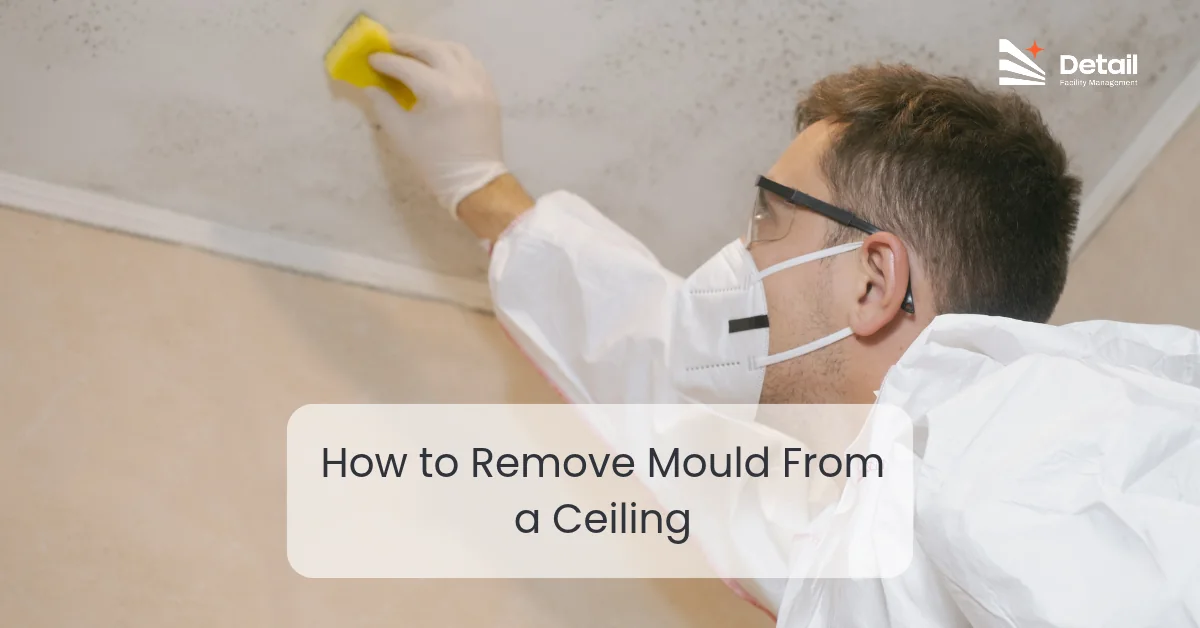
Mould on a ceiling is one of the most common problems in Melbourne homes, especially in bathrooms and south-facing bedrooms. You can remove small patches yourself in an afternoon with white vinegar and a few basic tools.
This guide shows you how to do it safely, what to avoid, and how to stop the mould coming back. It also explains when the mould is a sign of a bigger problem that needs a professional.
Quick answer
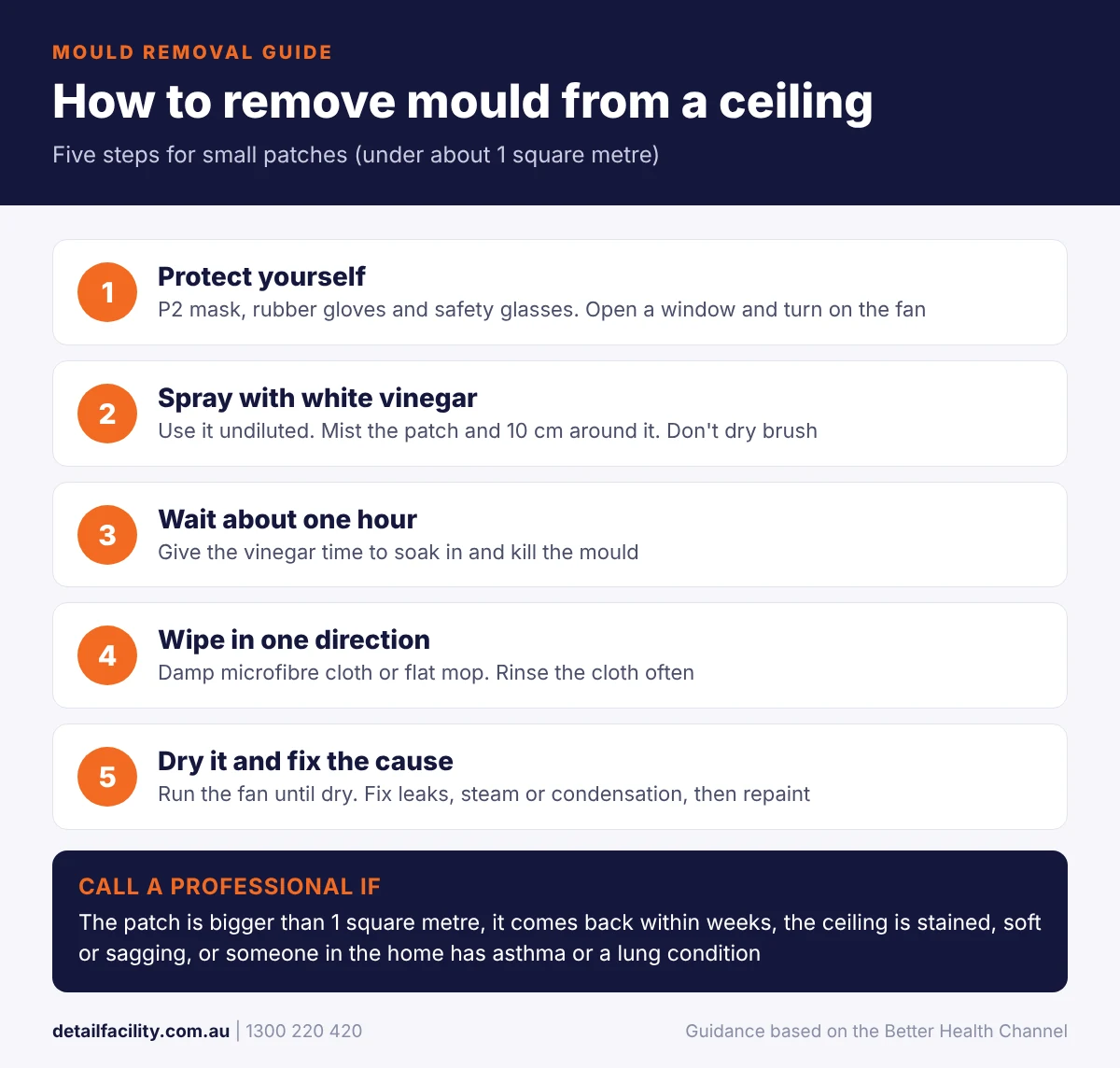
To remove mould from a ceiling, spray the patch with undiluted white vinegar, leave it for about an hour, and wipe it off with a damp microfibre cloth. Then dry the area and fix the cause of the moisture.
If the mould covers more than about one square metre, keeps coming back within a few weeks, or the ceiling is stained, soft or sagging, call a mould specialist.
Why mould grows on ceilings
Mould needs moisture, warmth and something to feed on, like paint, dust or plasterboard. Ceilings get all three because warm, wet air rises and settles there.
The most common causes are:
- Steam from showers in bathrooms with no exhaust fan, or a fan that is too weak or switched off too early
- Condensation in cold bedrooms and laundries, especially in winter
- Roof leaks from cracked tiles, blocked gutters or damaged flashing
- Plumbing leaks from pipes in the ceiling space or a bathroom upstairs
- Poor ceiling insulation, which leaves cold spots where moisture settles
The cause matters more than the cleaning. If you only wipe the mould off, it will come back.
What you need
| Item | Why you need it |
|---|---|
| P2 face mask | Stops you breathing in spores |
| Rubber gloves and safety glasses | Keeps mould and spray off your skin and out of your eyes |
| White vinegar (undiluted) | Kills most household mould on painted surfaces |
| Spray bottle | Lets you mist the ceiling without soaking it |
| Two microfibre cloths and a bucket of clean water | One cloth to wipe, the other to rinse and dry |
| Flat mop with a long handle | Lets you reach the ceiling without standing on a chair |
| Old towel or drop sheet | Catches drips and spores |
The Better Health Channel says household detergent or white vinegar is often enough for small to medium patches at home. You don't need expensive products for a light patch.
How to remove mould from a ceiling, step by step
1. Protect yourself and the room
Put on your mask, gloves and glasses before you start. Open a window and turn on the exhaust fan.
Move furniture out of the way or cover it. Keep children, pets and anyone with asthma out of the room.
2. Spray the mould
Fill the spray bottle with white vinegar. Mist the mouldy patch and about 10 cm around it until it is damp, not dripping.
Don't dry brush or scrub the mould first. That throws spores into the air and spreads them around the room.
3. Leave it to work
Wait about one hour. The vinegar needs time to soak in and kill the mould.
4. Wipe it off
Wipe the area with a damp microfibre cloth or a flat mop, working in one direction. Rinse the cloth often in your bucket so you don't spread mould onto clean paint.
For stubborn spots, spray again and repeat. Some people follow up with a mix of one teaspoon of bicarb soda in a spray bottle of water, then wipe again.
5. Dry the ceiling and fix the cause
Run the exhaust fan or a fan heater until the ceiling is fully dry. Wash the cloths on a hot cycle and throw out anything that can't be washed.
Then deal with the moisture. Check the table below for the most likely fix.
Bleach or vinegar: which works better?
Many older guides tell you to use bleach. Bleach can lighten the stain, but it may not reach mould that has grown into porous surfaces like painted plasterboard, so the mould can grow back.
RACV recommends vinegar over bleach for this reason. Here is how the common options compare.
| Product | Works on painted ceilings? | Notes |
|---|---|---|
| White vinegar | Yes | Best first choice. Leave on for about an hour |
| Household detergent and water | Yes, for light patches | Cleans surface mould. Dry well afterwards |
| Clove oil (a few drops in water) | Yes | Slower to work. Leave on and don't rinse |
| Commercial mould sprays | Often | Follow the label. Many contain bleach |
| Bleach | Not the first choice | Lightens stains, may not reach mould in porous surfaces |
Never mix bleach with vinegar, ammonia or other cleaners. The fumes can be dangerous in a small bathroom.
How to stop mould coming back
Cleaning only fixes what you can see. To stop it returning, you need to lower the moisture in the room.
| Cause | Fix |
|---|---|
| Shower steam | Run the exhaust fan during your shower and for at least 15 minutes after. Check it is ducted outside, not into the roof space |
| Winter condensation | Open a window for 10 minutes each morning and use a dehumidifier in cold rooms |
| Drying clothes inside | Dry clothes outside or in a vented dryer |
| Roof leak | Clear gutters and have a roofer check tiles and flashing |
| Plumbing leak | Get a licensed plumber to find and fix the leak |
| Cold spots in the ceiling | Check the insulation above the mouldy area is in place |
Once the ceiling is clean and dry, use a stain-blocking primer. Then repaint with a mould-resistant kitchen and bathroom paint.
When to call a mould removal professional
DIY works for small, surface patches. Call a professional when:
- The mould covers more than about one square metre
- It comes back within a few weeks of cleaning
- The ceiling is stained brown, bubbling, soft or sagging (this usually means water is getting in from above)
- You can smell mould but can't see where it is coming from
- Someone in the home has asthma, a lung condition or a weak immune system
- You are a renter or landlord and need a written report for the agent or insurer
The Better Health Channel also says some people should not clean or be in the room when mould is removed. This includes pregnant women, children, and people with weak immune systems or chronic lung disease.
Ceiling mould in a rental: who fixes it?
In Victoria, rental properties must meet minimum standards. One of them says all rooms must be free from mould and damp caused by or related to the building structure.
That means mould from a roof leak, a broken exhaust fan or poor ventilation is usually the rental provider's job to fix. Mould caused by how the home is used, such as drying clothes inside with the windows shut, may be the renter's to clean.
If you rent, take photos and report the mould to your agent in writing. If you own the property, a written mould report helps you show what caused it and what was done.
What a professional mould inspection includes
A proper mould job starts with finding the moisture, not with spraying. At Detail Facility Management, our team uses moisture readings and thermal imaging to find where the water is coming from.
Where it is needed, we add air quality testing. You then get a written report that explains what we found, the cause and the next steps.
For larger jobs, the area is sealed off so spores don't spread through the house. The mould and any damaged materials are removed, the structure is dried, and the moisture problem is fixed.
If your ceiling mould started after a leak or burst pipe, the water may also need drying out. Our water damage restoration team can check the ceiling space and dry it properly.
Key points
- Small ceiling mould patches can be cleaned with undiluted white vinegar
- Don't dry brush mould, and don't use bleach on painted plasterboard
- Wear a P2 mask, gloves and glasses, and keep vulnerable people out of the room
- Fix the moisture or the mould will come back
- Call a professional if the patch is large, keeps returning or the ceiling is stained or sagging
Need help with mould in Melbourne? Call Detail Facility Management on 1300 220 420 or book a mould inspection.