Restoration
Flood Damage Restoration & Insurance Claims: The Australian Guide
A step-by-step guide for Australian property managers and homeowners — IICRC-aligned flood damage restoration, documentation and how to navigate insurance claims.
Introduction
Flood damage is one of the most disruptive events an Australian property owner can face. From burst pipes and storm surge to stormwater ingress and river flooding, water travels quickly, contaminates materials and — if not dried correctly — leaves behind hidden moisture that leads to mould, structural decay and repeat insurance claims. This guide walks property managers and homeowners through the exact restoration process our IICRC-aligned crews follow, and how to document each stage so your insurer can settle the claim without friction.
Australia's Bureau of Meteorology reports that flooding is the most costly natural hazard in the country, and the Insurance Council of Australia has processed billions in flood-related claims over the past five years. Understanding the process before disaster strikes helps you act fast, protect occupants and preserve the value of your property.
First 24 hours after a flood
The first day after floodwater enters a building is critical. Materials absorb water quickly, microbial growth begins within 24–48 hours, and delays can move a Category 1 event into a Category 3 contamination scenario — dramatically increasing scope and cost.
- Ensure occupant safety — evacuate if water is above ankle height or near electrical outlets.
- Isolate power and gas at the mains before re-entering affected areas.
- Contact your insurer's 24/7 claims line and open a claim reference number.
- Engage an IICRC-certified restoration provider for emergency water extraction.
- Photograph and video every affected room before moving contents.
- Move undamaged contents to a dry, secure area — do not dispose of anything until your insurer or assessor approves.
Water damage categories (IICRC S500)
The IICRC S500 Standard for Professional Water Damage Restoration classifies water losses into three categories. Category determines PPE, containment, salvageable materials and the drying protocol — and it directly affects your insurer's scope of works.
| Category | Source | Typical scenario | Restoration approach |
|---|---|---|---|
| CAT 1 | Clean water | Burst supply line, overflowing sink | Extract, dry in place, minimal removal |
| CAT 2 | Grey water | Washing machine overflow, aquarium leak | Sanitise, remove absorbent porous materials, dry |
| CAT 3 | Black water | Stormwater, sewage, river flooding | HEPA containment, controlled strip-out, disinfection, structural drying |
Step-by-step restoration process
1. Emergency response & assessment
Within hours, technicians conduct a moisture mapping survey using thermal imaging and penetrating moisture meters. Readings are logged room-by-room to establish a drying baseline the insurer can verify at each site visit.
2. Containment & safety
For CAT 2 and CAT 3 events, HEPA-filtered air scrubbers are placed under negative pressure and plastic containment is erected to prevent cross-contamination into unaffected zones. Electrical and plumbing services are isolated where necessary.
3. Water extraction
Truck-mounted or portable extraction units remove standing water. On carpet, weighted extraction pulls water from the underlay; where underlay is saturated or contaminated, it is removed and disposed of.
4. Controlled strip-out
Non-salvageable porous materials — saturated plasterboard, insulation, skirting boards, underlay — are cut back to a documented height (commonly 300–600mm) and removed. All removals are photographed with reference measurements before disposal.
5. Cleaning & disinfection
Exposed framing, subfloors and remaining structure are cleaned with hospital-grade antimicrobial and mechanically agitated where required. Air scrubbers continue running throughout.
6. Structural drying
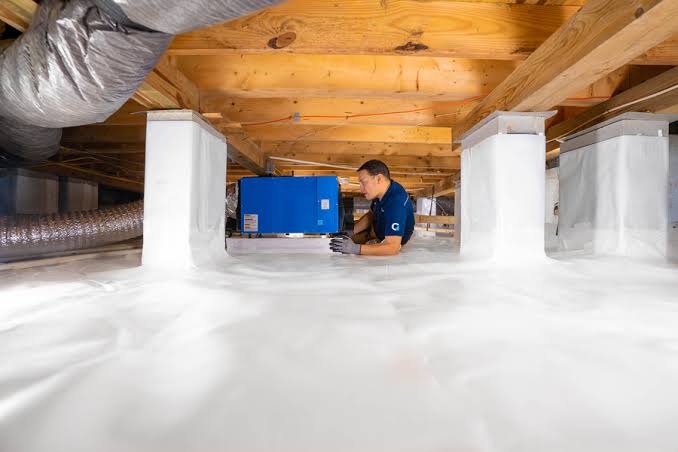
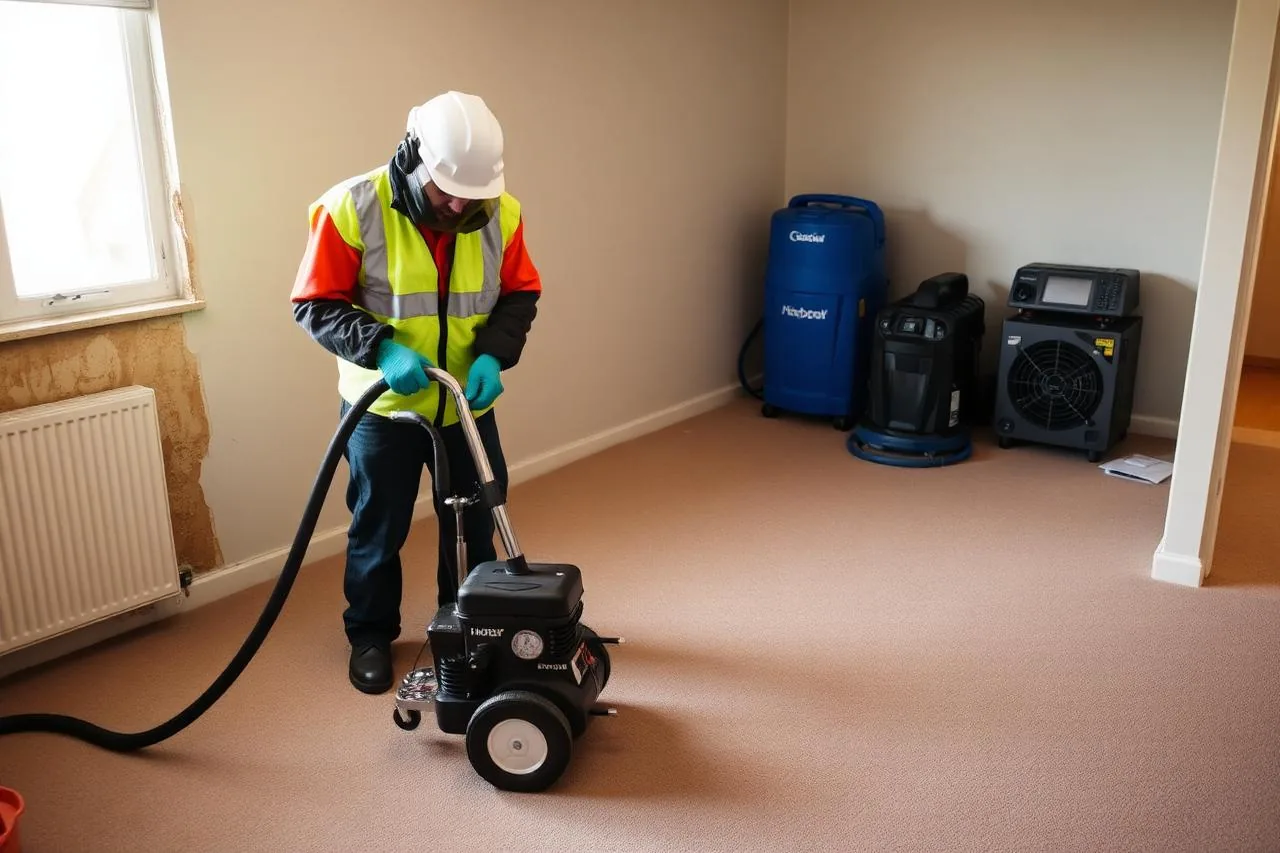
Air movers, dehumidifiers and air filtration devices are strategically installed. Daily moisture readings and psychrometric data (temperature, relative humidity, grains per pound) are logged until materials meet dry standard.
7. Verification & reinstatement
Once dry standard is met and verified independently, containment is removed and reinstatement — plasterboard, painting, flooring, cabinetry — can commence. Detail Facility can carry the project through reinstatement in-house.
Documentation for insurers
Well-documented restoration jobs settle faster and more completely. Insurers and loss adjusters need to see the loss, the scope and evidence that industry standards were followed. Your restoration provider should produce a report package that includes:
- Initial site inspection report with dated photos of every affected room
- Moisture mapping diagrams and daily psychrometric logs
- Category classification and rationale under IICRC S500
- Itemised scope of works with removals, drying, cleaning and reinstatement
- Waste disposal dockets for removed materials
- Final clearance report confirming dry standard
Navigating your insurance claim
Australian home and commercial policies vary widely — some exclude flood, some cover stormwater but not riverine flood, and excesses differ. The steps below help you protect your position with the insurer while restoration progresses.
- Notify your insurer within 24 hours and get your claim reference number.
- Ask which panel restorers are pre-approved — but note you generally have the right to choose your own IICRC-certified provider.
- Get an itemised scope of works before demolition begins; your assessor should approve the scope in writing.
- Keep every invoice, receipt and photo — insurers reimburse documented, reasonable costs.
- If cover is disputed, escalate through your insurer's internal dispute resolution process, then to the Australian Financial Complaints Authority (AFCA) if unresolved.
AFCA provides free, independent dispute resolution for insurance claims in Australia and is a powerful backstop if you feel a claim has been unfairly declined or under-scoped.
DIY vs professional restoration
| Aspect | DIY | Professional (IICRC-certified) |
|---|---|---|
| Water category assessment | Guesswork | IICRC S500 classification |
| Equipment | Household fans, mop, wet-vac | Truck-mount extraction, dehumidifiers, air movers, HEPA scrubbers |
| Moisture verification | Look and feel | Thermal imaging + penetrating meters + daily logs |
| Mould risk | High — hidden moisture | Low — verified dry standard |
| Insurance documentation | Limited photos | Full report package, psychrometrics, dockets |
| Timeframe to dry standard | Weeks (often incomplete) | 3–7 days for typical residential |
Costs & timelines in Australia
As a broad benchmark, residential water damage restoration in Australia typically ranges from $2,500 for small CAT 1 events to $25,000+ for large CAT 3 losses requiring extensive strip-out. Commercial and multi-room jobs are quoted on scope. Where insurance covers the loss, most of these costs are recoverable — you generally pay only your policy excess.
Typical timelines: emergency response within 2–4 hours, extraction and containment within the first 24 hours, structural drying 3–7 days, then reinstatement depending on the scope of removals.
Choosing a restoration provider
- IICRC certification in Water Damage Restoration (WRT) and Applied Structural Drying (ASD)
- 24/7 emergency response with published response times
- Direct insurer billing and experience with major Australian insurers
- Full report package included (moisture logs, photos, scope, dockets)
- In-house or trusted trade capability to complete reinstatement
- Public liability and workers' compensation insurance current and available on request
FAQs
Conclusion
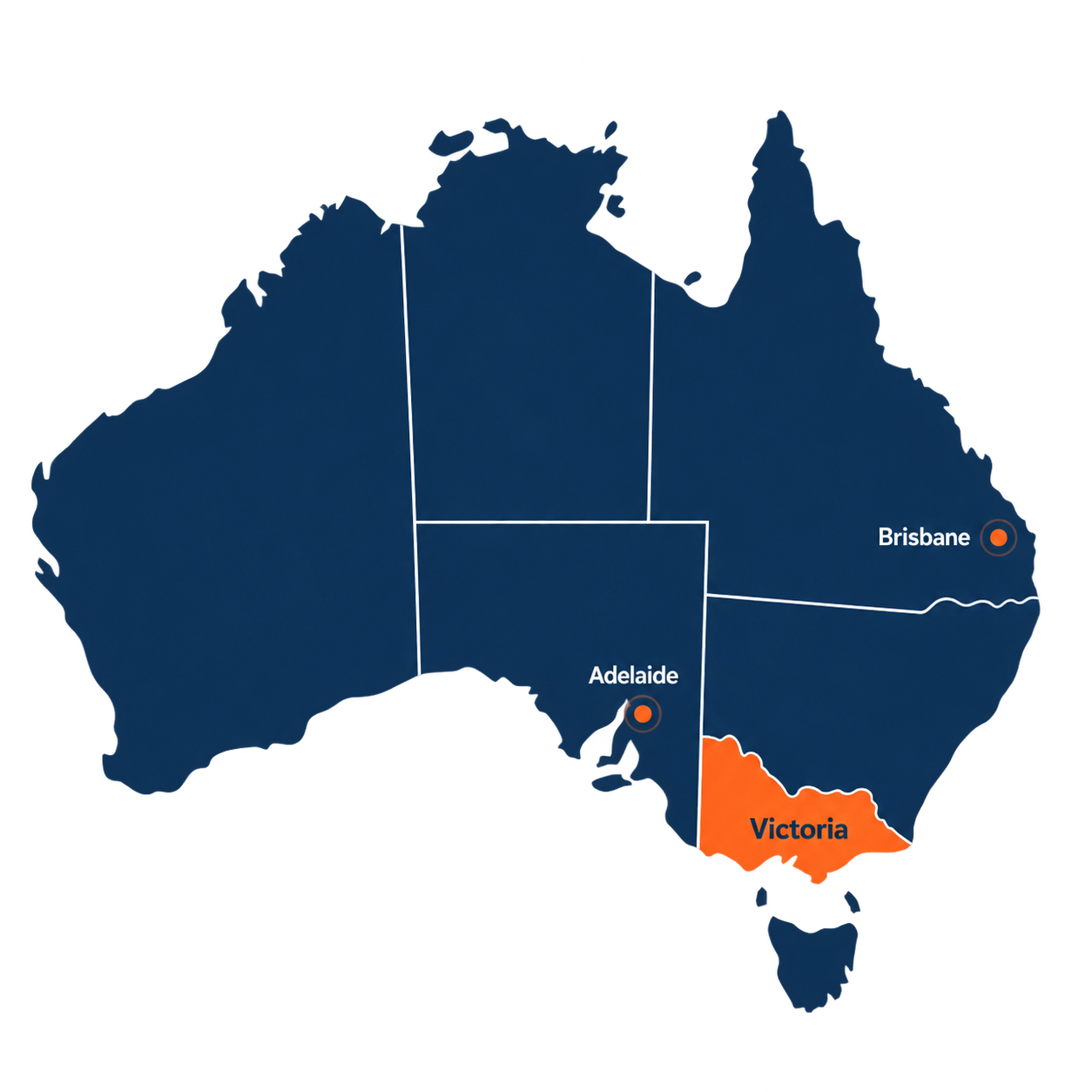
Flood damage is manageable when you act quickly, follow IICRC S500 process and document every step for your insurer. If your property has been affected by flood, storm or water damage in Victoria, Detail Facility Management provides IICRC-aligned 24/7 emergency response, full documentation and end-to-end reinstatement.