Restoration
Burst Pipe? What to Do in the First Hour (Melbourne Guide)
A burst pipe can flood a home in minutes. Here is what to do first, how to turn off your water, who pays for repairs in Victoria and what it costs to fix.
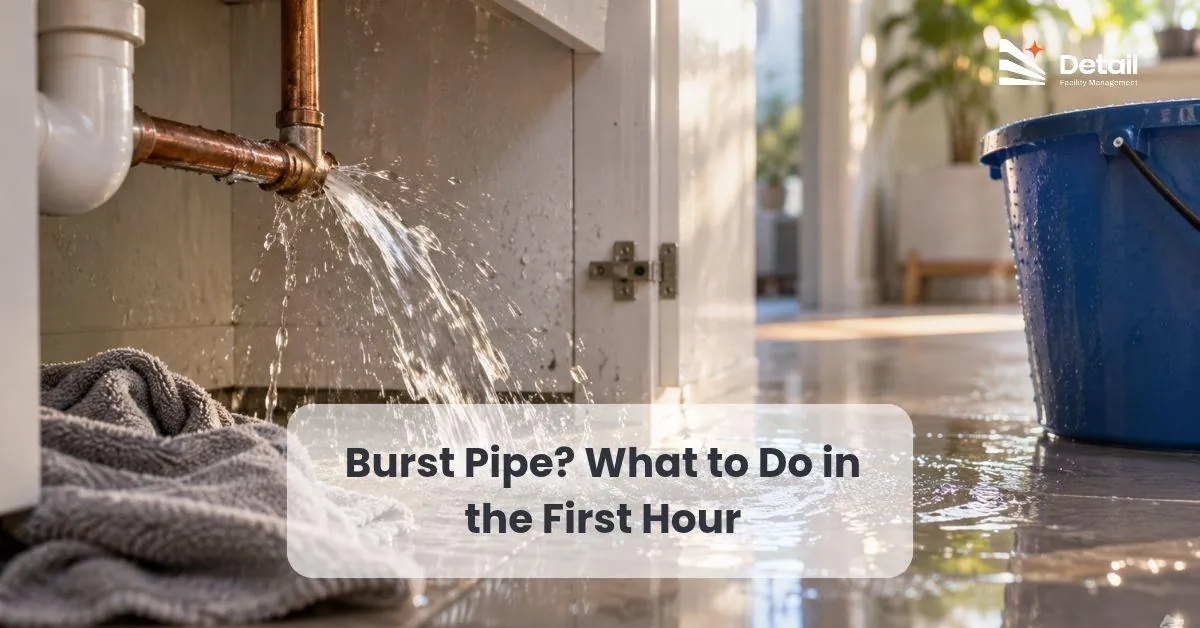
A burst pipe can release hundreds of litres of water an hour into your walls, floors and ceilings. What you do in the first few minutes decides how much damage you end up paying for.
This guide shows you what to do, how to find and turn off your water meter, who pays for the repair in Victoria, and what it costs.
Quick answer
When a pipe bursts, turn off the water at the meter first. Then switch off power to any wet area, move valuables away, take photos and call a licensed plumber.
Once the pipe is fixed, the building needs to be dried properly. Wet walls and floors can grow mould within 24 to 48 hours.
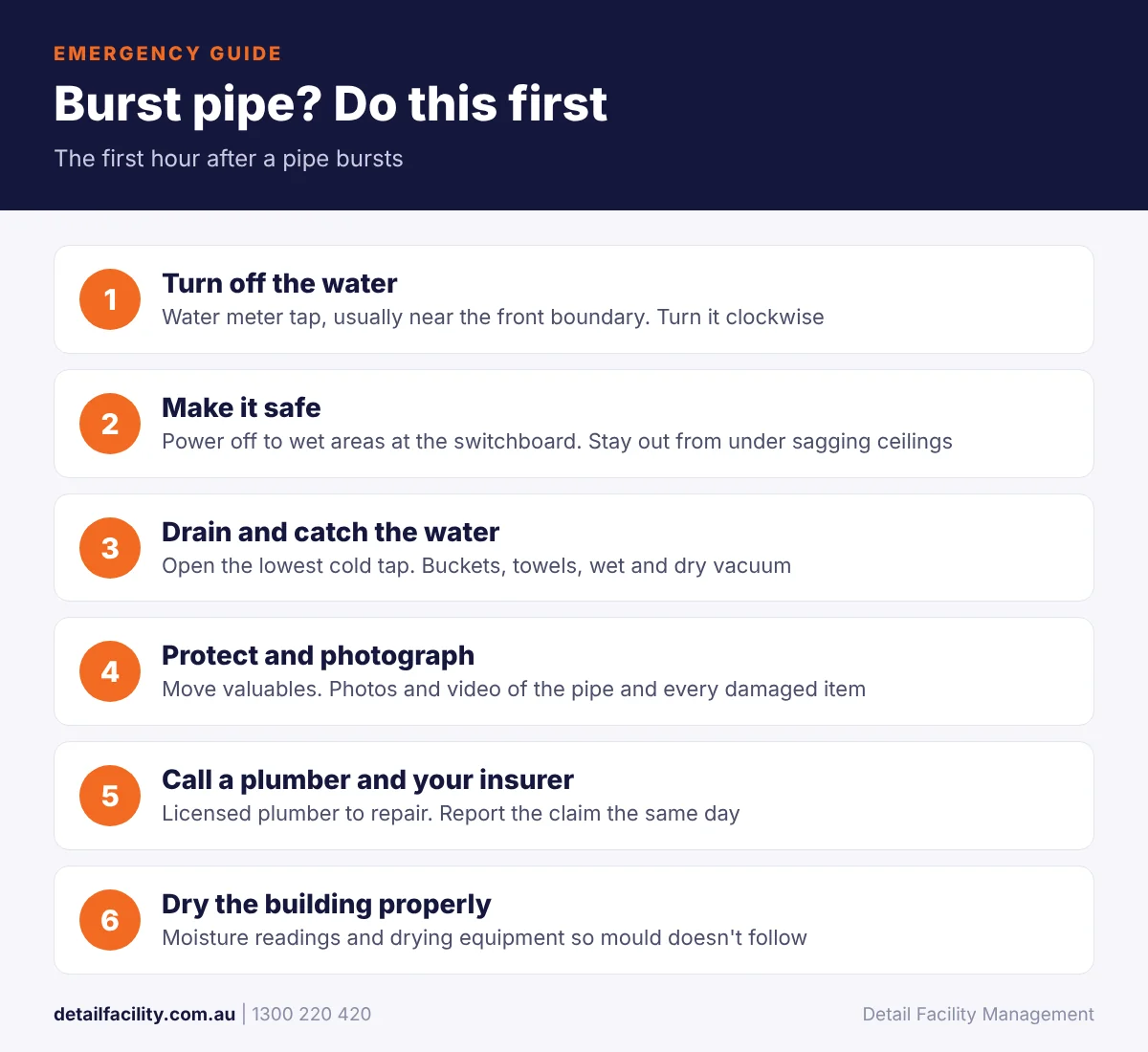
Step 1: Turn off the water
Your main water shut-off is the tap on your water meter. In most Melbourne homes it is near the front boundary, close to the footpath, sometimes inside a small box or cover.
Turn the tap clockwise until it stops. If it is stiff, use a cloth for grip, but don't force it so hard that it snaps.
In apartments and units, there is often an isolation valve in the unit, a cupboard or the laundry. If you can't find it, call your building manager or owners corporation.
Step 2: Make it safe
If water is near power points, appliances or light fittings, switch off the power to that area at the switchboard. Don't touch the switchboard if you are standing in water.
Keep people out from under any ceiling that is sagging or bulging with water.
Step 3: Drain the pipes and catch the water
Open the cold taps at the lowest point in the house to drain water left in the pipes. Turn off your hot water system as well, following the maker's instructions.
Put buckets, towels and old sheets under any drips. Use a wet and dry vacuum if you have one.
Step 4: Protect your belongings and take photos
Move furniture, rugs, electronics and paperwork away from the water. Lift curtains off wet floors.
Take photos and short videos of the burst pipe, the water and every damaged item. Keep any parts the plumber removes, as your insurer may want to see them.
Step 5: Call a plumber and your insurer
Call a licensed plumber to repair the pipe. If it is after hours, ask about the call-out fee before they come.
Call your insurer the same day. Ask what they need from you and whether they will send their own assessor.
Step 6: Dry the building properly
This is the step people most often skip. Floors and walls can look dry on the surface while the timber, plaster and insulation stay wet underneath.
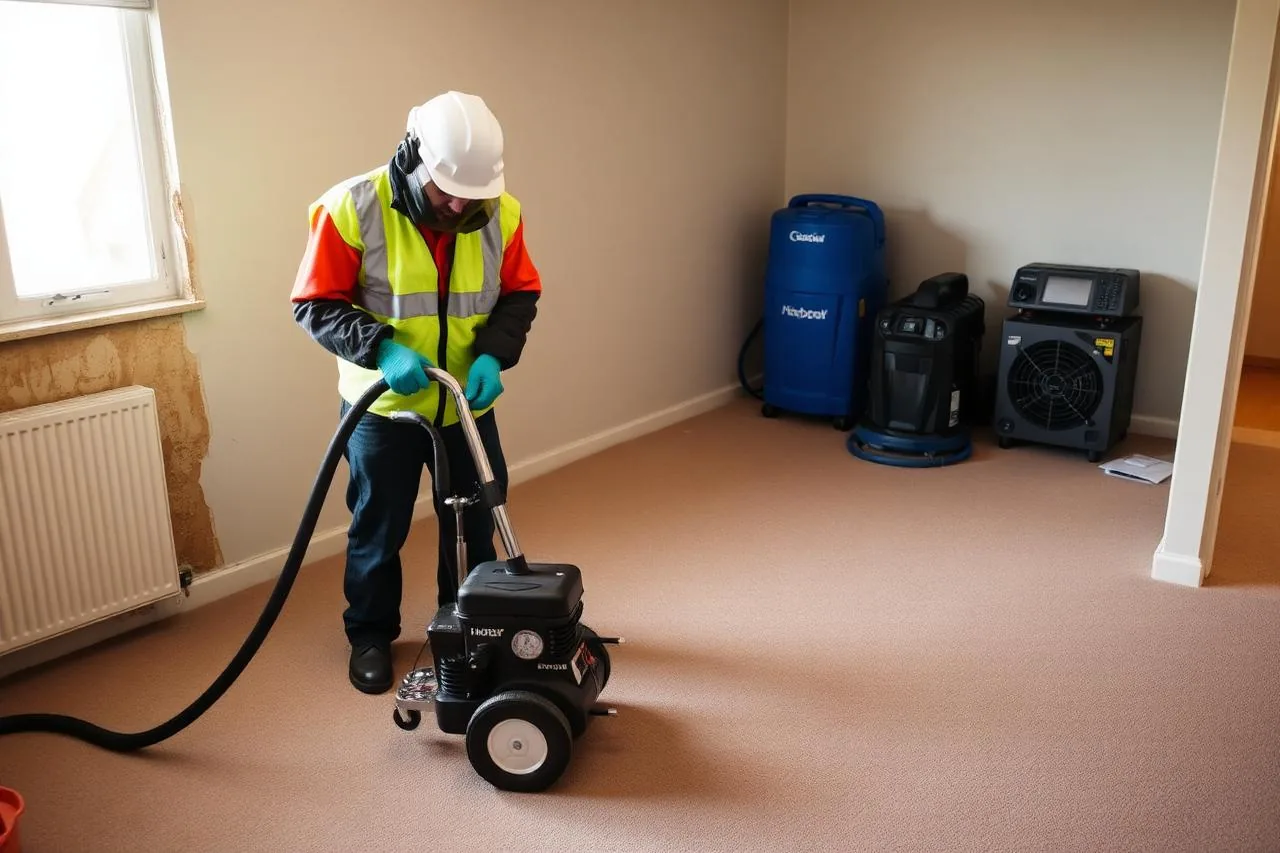
Professional drying uses moisture meters and thermal imaging to find all of the wet areas. Industrial dehumidifiers and air movers then dry the structure, with readings taken until it is back to a dry level.
Signs a pipe has burst or is leaking
Not every burst pipe sprays water across the room. Some leak slowly inside walls or under floors.
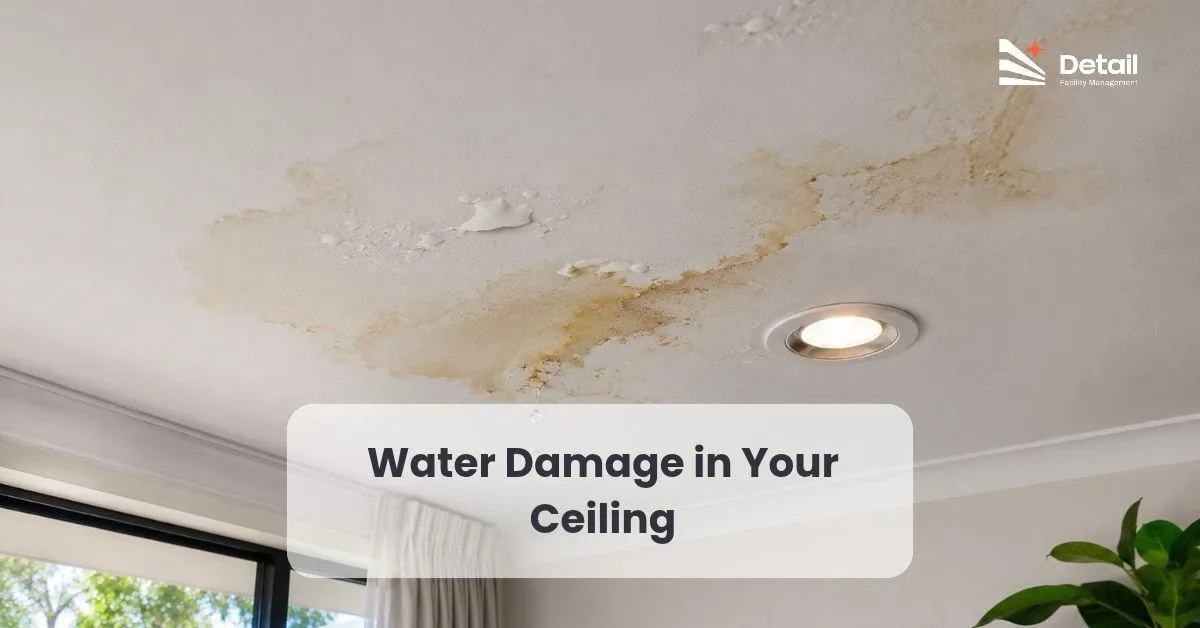
- Water stains or bubbling paint on walls and ceilings
- Damp, lifting or warped floorboards and carpet
- A hissing or running water sound when every tap is off
- Low water pressure
- A water bill that is higher than normal
- A musty smell or new mould in one area
To check for a hidden leak, turn off every tap and appliance and look at your water meter. If the numbers keep moving, water is escaping somewhere.
What causes pipes to burst?
| Cause | What happens |
|---|---|
| Old pipes | Copper and galvanised pipes thin and corrode over decades |
| High water pressure | Puts extra strain on joints and fittings |
| Worn flexi hoses | Braided hoses under sinks, basins and toilets wear out and can split |
| Tree roots | Roots push on and crack underground pipes |
| Ground movement | Clay soils that shrink and swell can stress pipes |
| Building work | Nails, screws and drills can pierce pipes in walls |
Check the flexi hoses under your sinks, basins and toilets. Replace any that are rusty, frayed, kinked or bulging.
Burst pipes in apartments and strata buildings
In apartments, water from one burst pipe often travels down to the units below. Act fast and tell your neighbours, the building manager and the owners corporation.
Pipes that serve more than one unit are usually common property, so the owners corporation organises the repair. Damage inside each unit may be claimed on the building insurance or the owner's own policy, depending on the cause.
For hotels, offices and other commercial buildings, staff need to know where the main isolation valves are before anything goes wrong. A quick response can keep the rest of the building open.
Who pays for a burst pipe in Victoria?
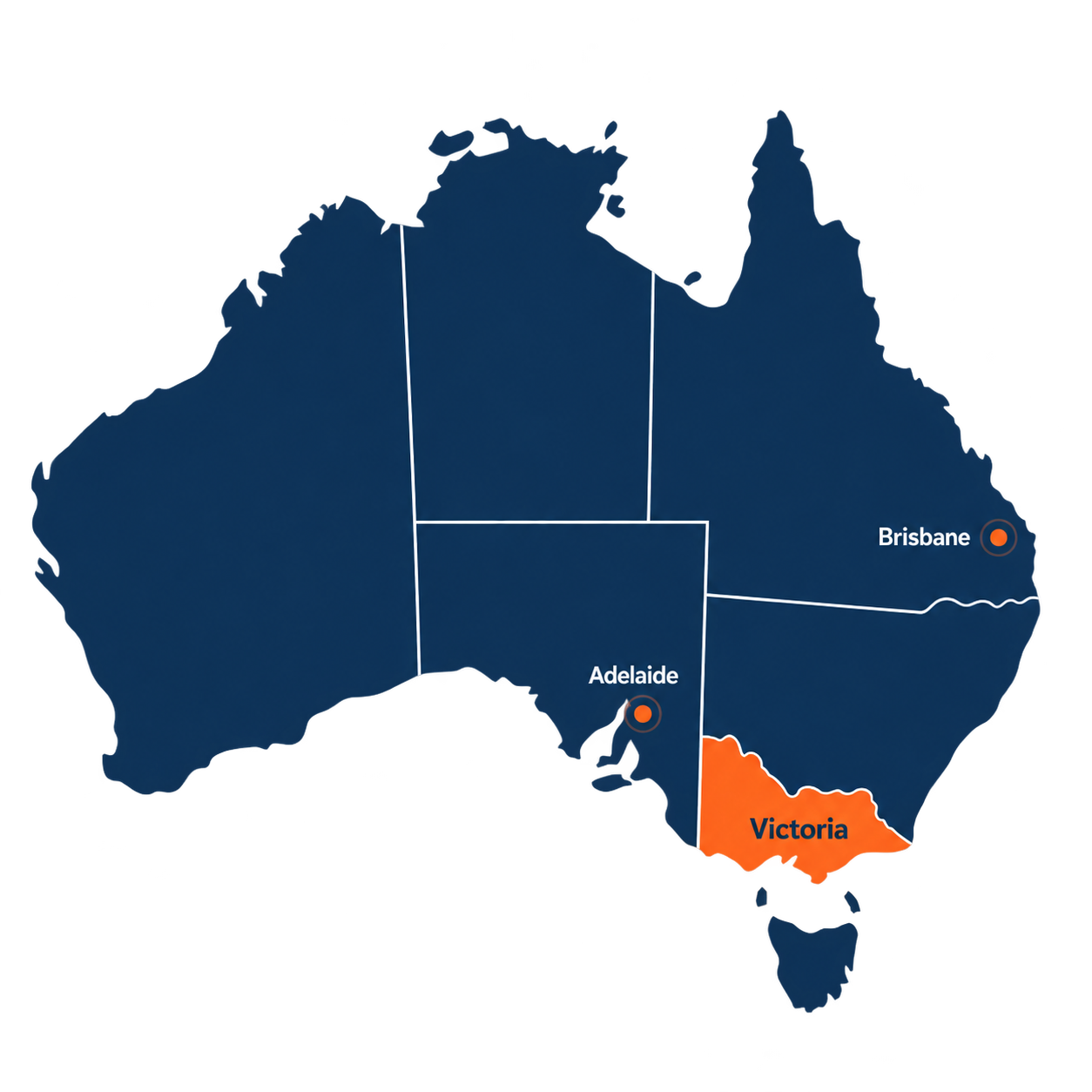
In most of Melbourne, the water corporation is responsible for the pipe up to and including the water meter. The property owner is responsible for the pipes from the meter into the house.
If water is leaking on the street side of the meter, call your water corporation. If it is on your side, call a licensed plumber.
| Situation | Who usually pays |
|---|---|
| Leak before the meter, in the street or footpath | Your water corporation |
| Pipe from the meter to the house | Property owner |
| Pipes inside a rental home | Rental provider, as an urgent repair |
| Common property pipes in apartments | Owners corporation |
| Damage to floors, walls and belongings | Often covered by home or building insurance for sudden bursts |
If you rent, tell your agent or rental provider straight away. A burst water service is an urgent repair in Victoria.
How much does it cost to fix a burst pipe?
| Item | Typical Melbourne cost (2026) |
|---|---|
| Burst pipe repair | About $210 to $840, many jobs around $580 |
| Standard call-out or service fee | About $63 to $160 |
| After-hours emergency visit | About $260 to $735 |
| After-hours hourly rate | About $160 to $315 per hour |
| Leak detection for hidden leaks | Varies with access and equipment |
These ranges come from published 2026 Melbourne plumbing price guides. Drying, mould treatment and repairs to walls, floors and ceilings are separate costs.
In Victoria, plumbing work must be done by a licensed or registered plumber. For work valued at $750 or more, your plumber must give you a signed compliance certificate within five days.
How to stop it happening again
- Know where your water meter tap is, and check it turns
- Replace worn flexi hoses every few years or when they show wear
- Ask a plumber to check your water pressure if pipes bang or taps spray
- Keep tree roots away from water and sewer lines
- Get old galvanised pipes checked if your home is more than 40 years old
How we can help
Detail Facility Management has licensed plumbers and a water damage restoration team under one roof. We fix the pipe, extract the water, dry the building and check for mould, all as one job. Call us 24/7 on 1300 220 420.